Pre-fatigue
Also known as: Pre-exhaustion
Pre-fatigue, also called pre-exhaustion, is an exercise-order method in which an isolation exercise is performed before a compound exercise that involves the same intended muscle. The first exercise deliberately tires that muscle before the multi-joint movement begins.
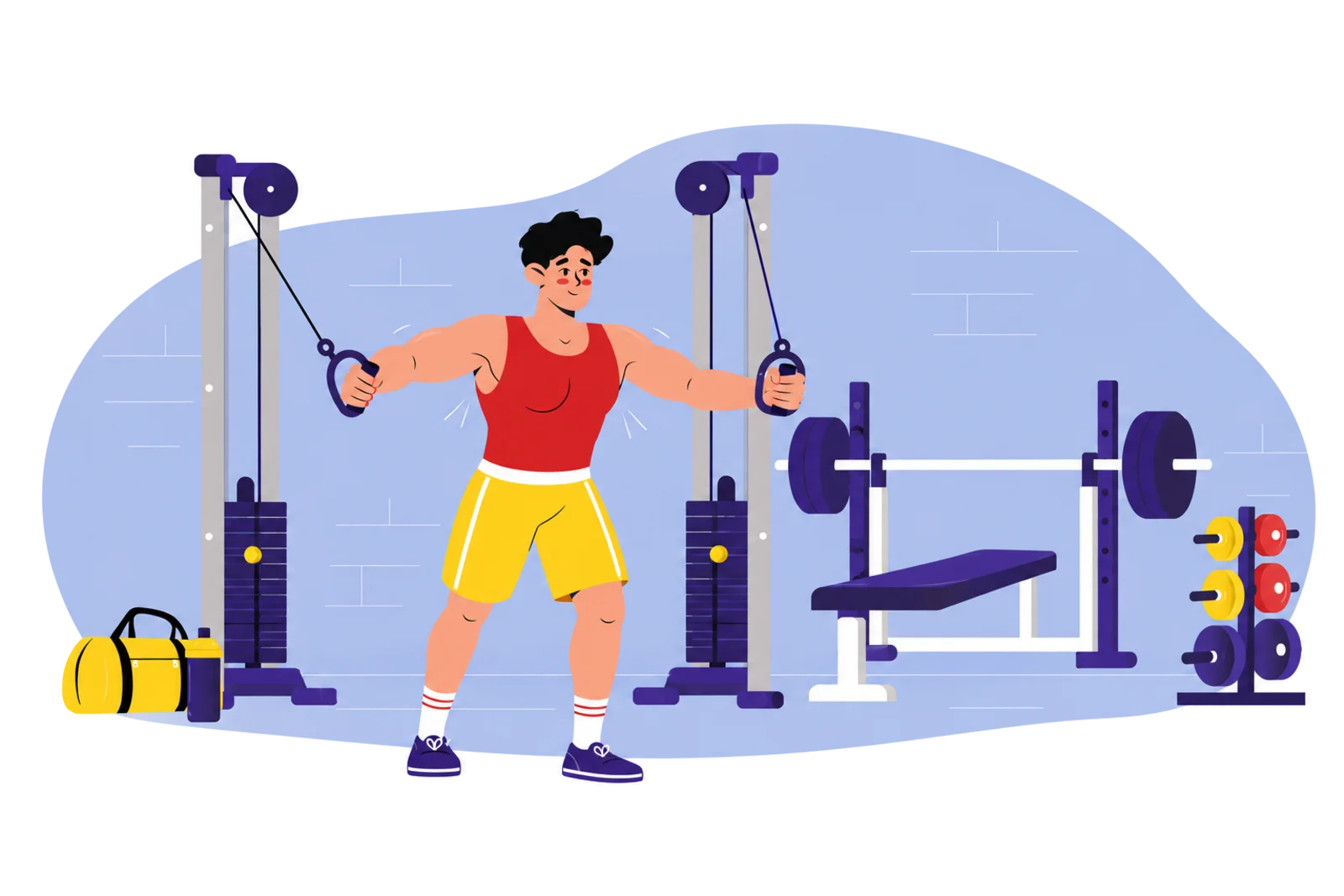
A common example is a chest fly before a pressing exercise or a leg extension before a squat or leg press. The rationale is that the intended target muscle may receive more emphasis in the compound movement after being pre-fatigued. That is a proposed mechanism, not an established outcome. The first exercise can also reduce the load or repetitions achieved in the second, and other muscles may still become limiting.
Evidence does not show a general muscle-building advantage. A 2022 review of pre-exhaustion research found no consistent superiority for long-term strength, hypertrophy, or body-composition outcomes and noted that pre-exhaustion commonly reduced performance in the subsequent compound exercise. A 2026 randomized trial in resistance-trained adults likewise did not find an advantage over a traditional exercise order. Results from one sequence or muscle should not be generalized to every exercise pair.
Pre-fatigue may still be used for preference, variety, or to change which exercise receives priority. It is a form of deliberate exercise order, not proof that isolation-first is universally better. If strength or technical performance in the compound movement is the main goal, placing that movement first usually gives it a less-fatigued practice environment.
Choose exercises that can be performed and stopped safely, and expect to use less load in the second movement than when it is performed fresh. Avoid forcing the usual numbers when control or range of motion has changed. Track the isolation and compound exercises as a fixed pair, including order and rest, so that performance comparisons remain meaningful. Pre-fatigue can make a set feel harder without requiring either exercise to reach complete muscle failure.