Strength training
Also known as: Resistance training, Weight training
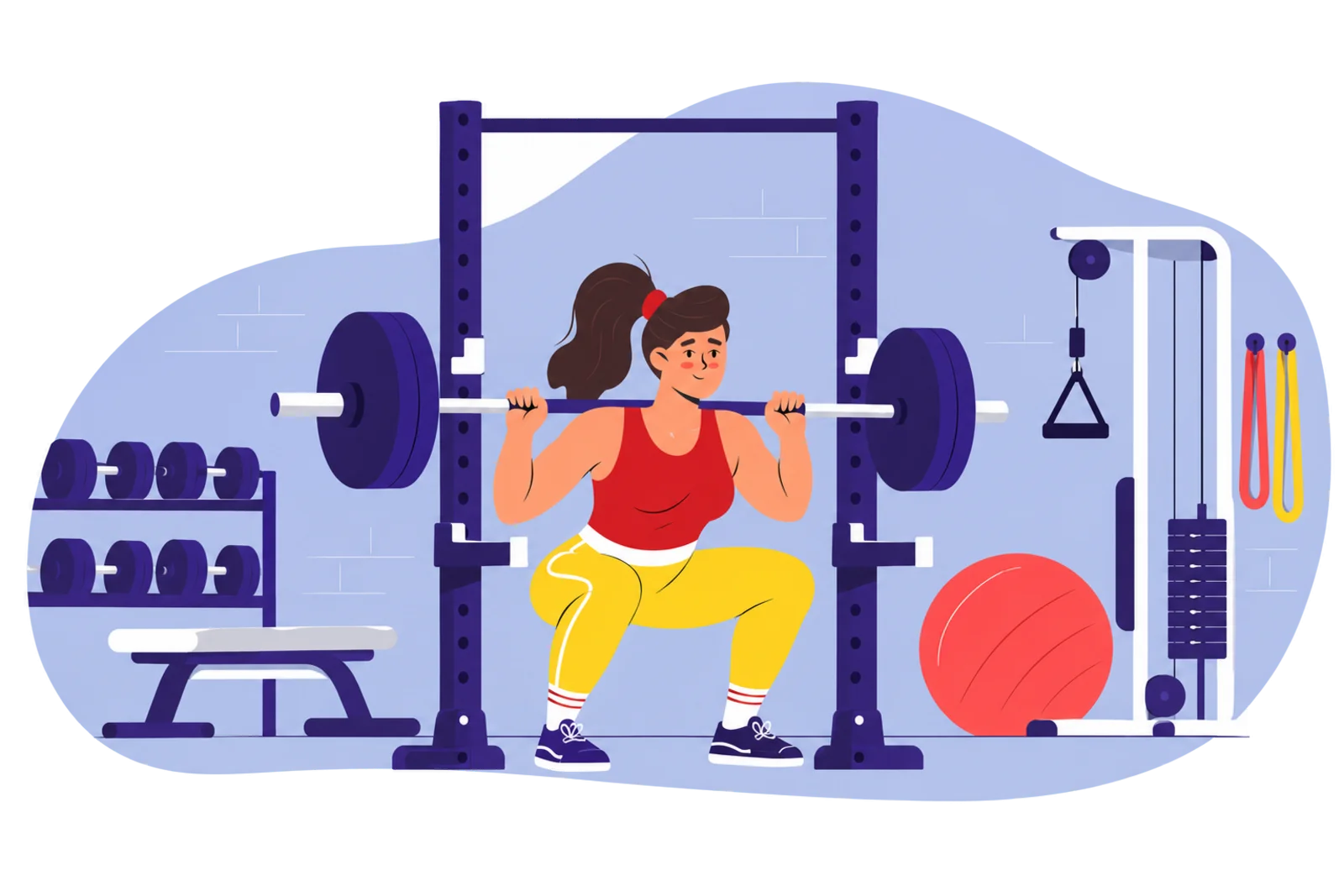
Strength training, also called resistance training, is exercise in which muscles produce force against an external resistance. That resistance can come from barbells, dumbbells, machines, cables, bands, body weight, or another person. The term describes a broad type of training, not one sport or one outcome: it can be programmed to improve strength, muscle size, power, muscular endurance, physical function, or a combination of these.
The goal determines how the training is organized. Training for maximal strength emphasizes producing high force in specific movements, whereas training for muscular power emphasizes producing force quickly. Strength endurance concerns repeated or sustained force, and muscle hypertrophy concerns growth in muscle size. Bodybuilding and powerlifting both use resistance training, but they are sports with different competitive objectives rather than synonyms for strength training.
The main programming variables include exercise selection, load, repetitions, sets, rest intervals, range of motion, movement intent, and weekly frequency. Their importance depends on the desired training adaptation. A 2026 American College of Sports Medicine position stand concluded from 137 systematic reviews that progressive resistance training improves strength, muscle size, power, endurance, and several measures of physical function in healthy adults. Its findings also show why there is no single best setup for every goal: heavier loads were especially useful for maximal-strength outcomes, higher weekly set volumes favored hypertrophy on average, and fast concentric intent with suitable loads favored power.
Progress does not require adding weight at every workout or taking every set to failure. Progressive overload means that the challenge develops over time as your capacity improves; this can involve load, repetitions, sets, range of motion, technique, or a harder exercise variation. A manageable starting dose, repeatable technique, gradual changes, and enough recovery usually make progress easier to interpret. Pain, illness, injury, or relevant medical conditions may require individual guidance from a qualified professional.
For general health, strength training complements aerobic activity rather than replacing it. The WHO physical activity guidelines include both muscle-strengthening and aerobic activity because they address overlapping but distinct aspects of health and fitness.
The Alpha Progression app lets you create a strength-training plan, log workouts, loads, and repetitions, use a rest timer, and track personal records for free. Alpha Progression Pro can additionally generate plans and provide set-by-set weight and repetition recommendations based on your logged performance.