CrossFit
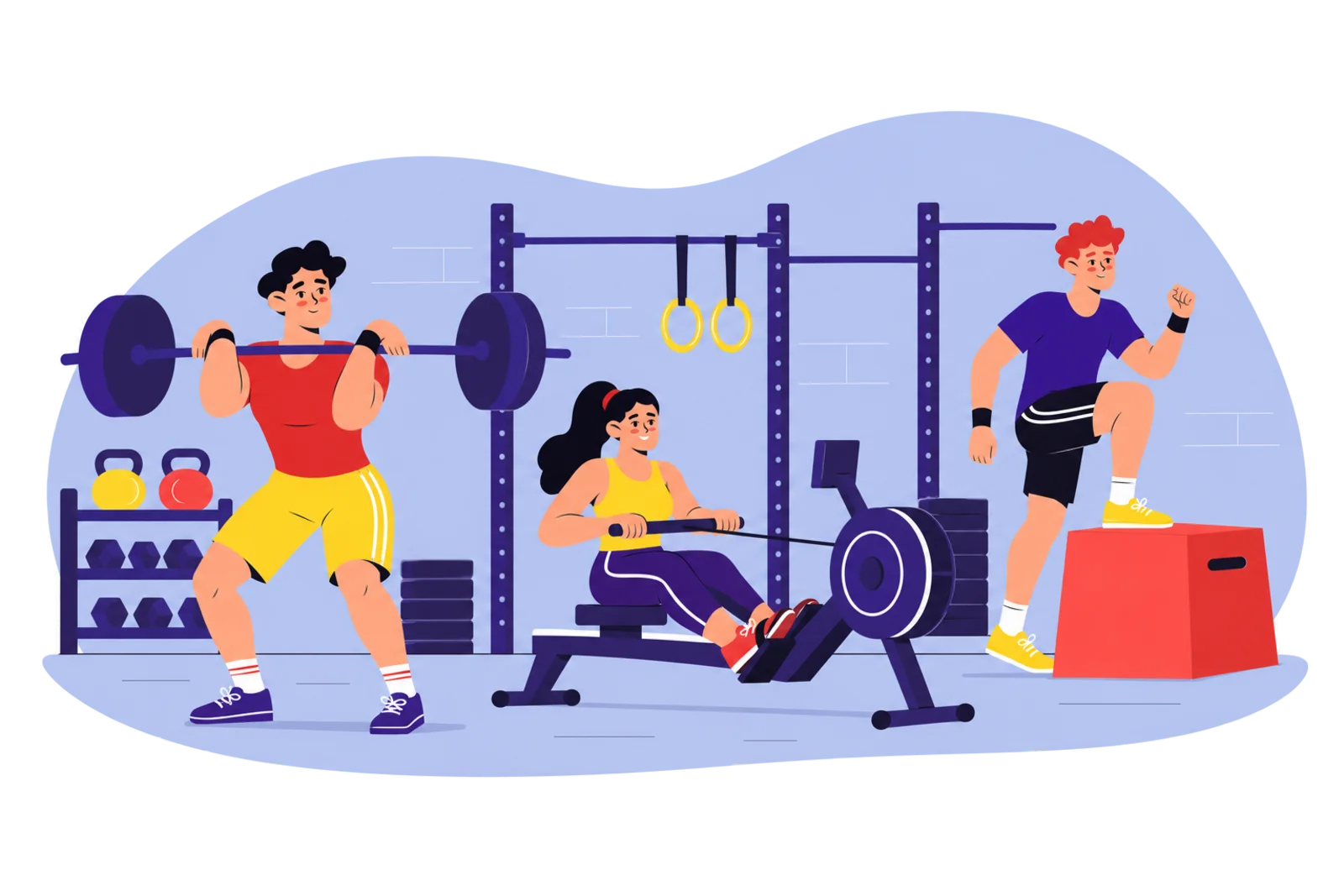
CrossFit is a global fitness brand and the name of its associated training methodology, not a generic term for every hard circuit workout. The company describes the method as constantly varied functional movements performed at relative intensity. In practice, classes may combine weightlifting, gymnastics or bodyweight exercises, and monostructural conditioning such as running, rowing, or cycling.
A typical affiliate class can include a warm-up, technique or strength training, and a Workout of the Day, commonly shortened to WOD. The WOD may ask for rounds, repetitions, or work completed within a time limit, but formats vary widely. Loads, movements, range of motion, and targets can be scaled to the participant. CrossFit's own description of the methodology emphasizes relative rather than identical absolute intensity.
CrossFit overlaps with several training categories without being identical to them. Many WODs resemble circuit training, and some qualify as HIIT, but a heavy strength segment or skill practice may do neither. CrossFit also includes cardio, yet it is not solely an endurance program. "High-intensity functional training" is the broader generic research term; CrossFit is the specific brand and community built around one version of that approach.
Because programming can mix complex lifts, gymnastics, speed, and fatigue, the demands differ sharply from one workout to another. A movement that is technically sound when fresh may need a lighter load, simpler variation, or slower pace in a timed WOD. Consistent form and an appropriate progression matter more than matching another person's prescribed weight or score.
Injury claims require caution in both directions. A systematic review of CrossFit injury epidemiology found wide variation in reported rates and substantial differences in study methods; shoulders, spine, and knees were commonly reported sites. The evidence does not support treating every CrossFit session as uniquely dangerous or automatically safe. Coaching quality, exercise skill, scaling, previous issues, and exposure all affect risk, and pain is a reason to stop and assess rather than compete through altered technique.