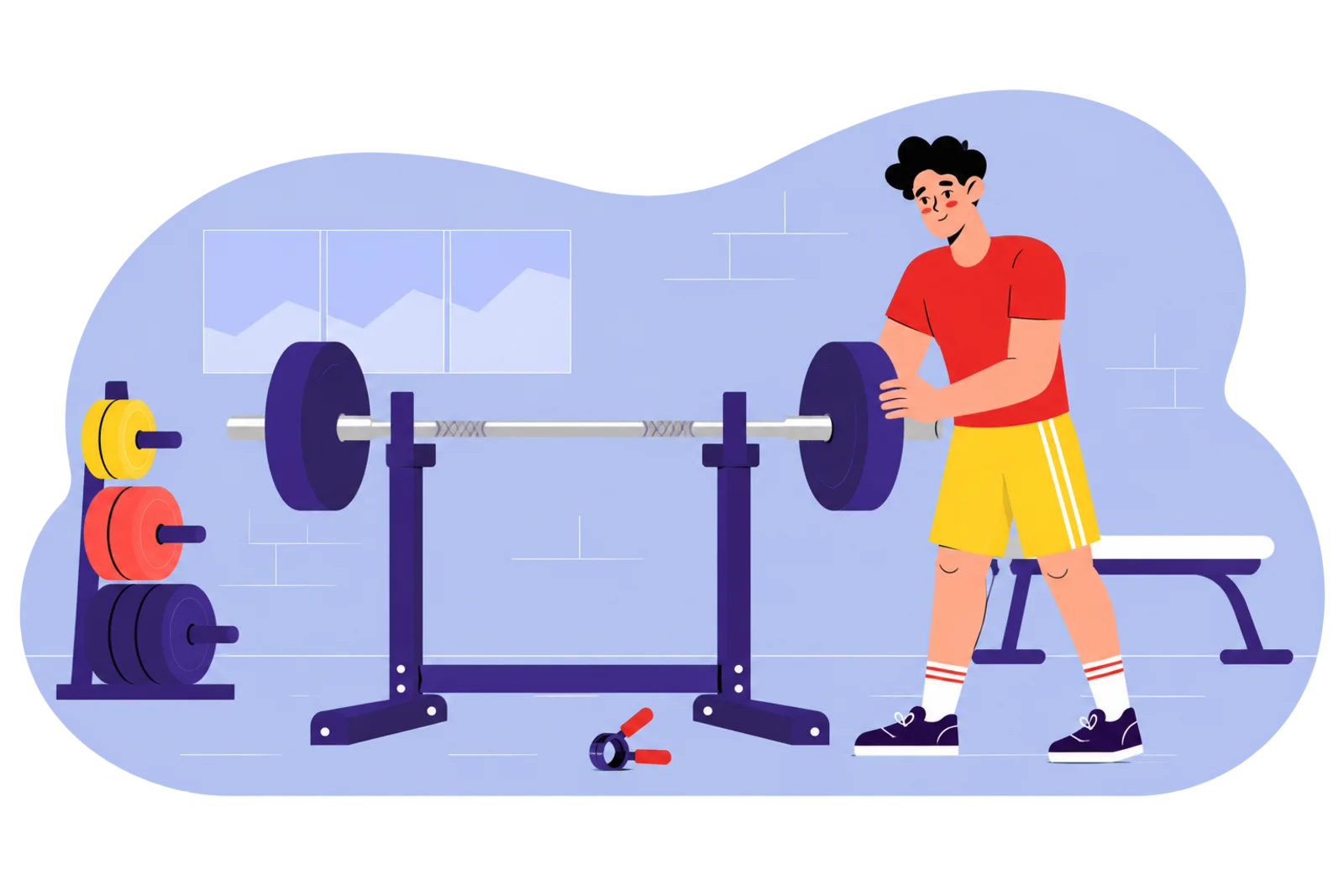
Barbell
A barbell is a long strength-training bar designed to be held with one or both hands and usually loaded at both ends. Most loadable barbells have a central shaft, grip markings or knurling, and sleeves for weight plates. Fixed-weight barbells also exist. The term describes the implement, not a particular exercise or training method.
Barbells are a type of free weight. Common barbell exercises include squats, deadlifts, bench presses, overhead presses, rows, and curls, but no exercise is mandatory merely because a bar is available. In powerlifting, the squat, bench press, and deadlift are main lifts; in another plan, the barbell may be used only for selected assistance exercises.
Bar dimensions and behavior vary. Olympic-style bars have rotating sleeves, while power, weightlifting, multipurpose, technique, and specialty bars differ in diameter, stiffness, knurling, sleeve length, and tensile properties. A bar should not be assumed to weigh 20 kilograms or 45 pounds without checking. Short bars, women's competition bars, technique bars, and fixed barbells can have different masses.
Compared with dumbbells, a single bar connects both hands and can make bilateral loading and small plate-based increases convenient. That connection also limits how independently the sides can move. The straight shaft distinguishes a conventional barbell from specialty shapes such as a trap bar or EZ bar, whose grips and load position change the exercise setup.
Progression depends on the plates and available weight increments, not on the bar alone. Record whether the logged load includes the bar, and use the same convention consistently. When changing bars, note differences in mass and dimensions because they can alter the total load and feel of an exercise.
Use collars when plates could slide, inspect the bar and sleeves, and check the rack, bench, and safety arms before loaded exercises. For lifts where a failed repetition could trap the lifter, suitable safeties or competent spotting are important. A barbell permits substantial loading, but that does not make it universally more effective or safer than another tool.