Main lifts
Also known as: Primary lifts
Main lifts are the exercises a training program treats as its primary measures and drivers of progress. They receive priority because they closely represent the program's main goals, not because they belong to a universal list.
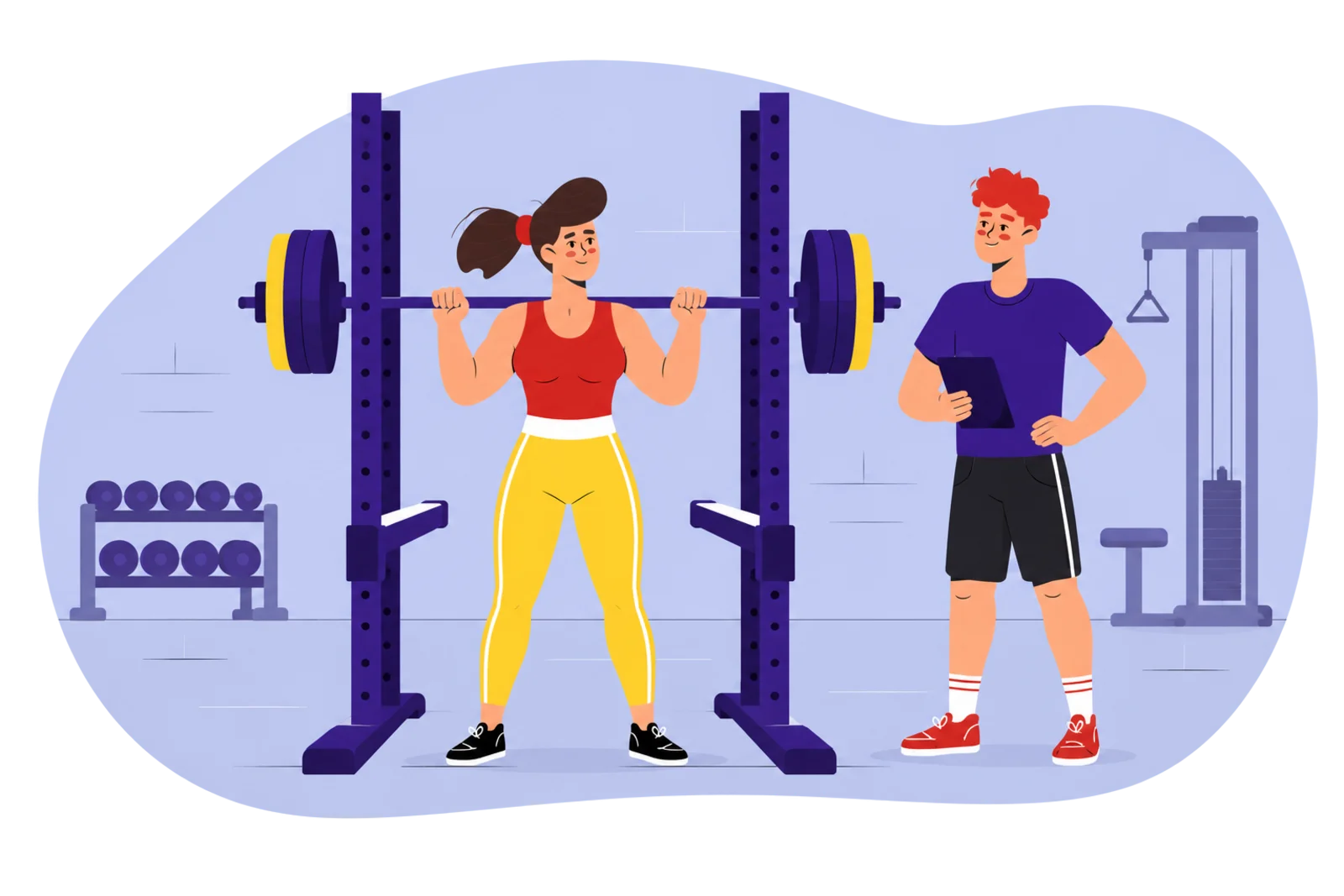
In powerlifting, the squat, bench press, and deadlift are main lifts because they are the competition lifts. In another strength program, an overhead press or weighted pull-up may fill that role. A bodybuilding plan may prioritize a machine press, row, or hack squat when it provides a suitable stimulus and can be progressed consistently. Main lifts are often compound exercises, but a priority isolation movement can be a main lift in a specialization block.
The terms main lift, primary lift, big lift, and fundamental exercise are used inconsistently. In German, Grundübung often implies a familiar multi-joint movement, whereas Hauptübung more clearly describes the exercise's role in a specific plan. Neither term should be confused with Alpha Progression's exercise-size labels. Large, medium, and small are planning categories; main describes priority.
A useful main lift matches the intended skill or muscle, is tolerable for the lifter, suits the available equipment, and can be repeated often enough to assess progression. The specificity principle matters especially for strength: if you want to improve a particular lift, practicing that lift or a very close variation is usually central. For hypertrophy, more exercise options can serve as main movements because the goal is the muscular stimulus rather than performance in one prescribed technique.
Main lifts are commonly placed early in the exercise order, when fatigue is lower, and kept stable across a meaningful training period. That is a practical default, not a rule that every session must begin with a barbell lift. The goal of the session determines what deserves priority.