Warm-up
A warm-up is a short period of activity immediately before training that prepares you for the movements and effort to come. In strength training, it usually combines an optional general warm-up with exercise-specific preparation. A useful warm-up should leave you ready to perform, not tired before the first working set.
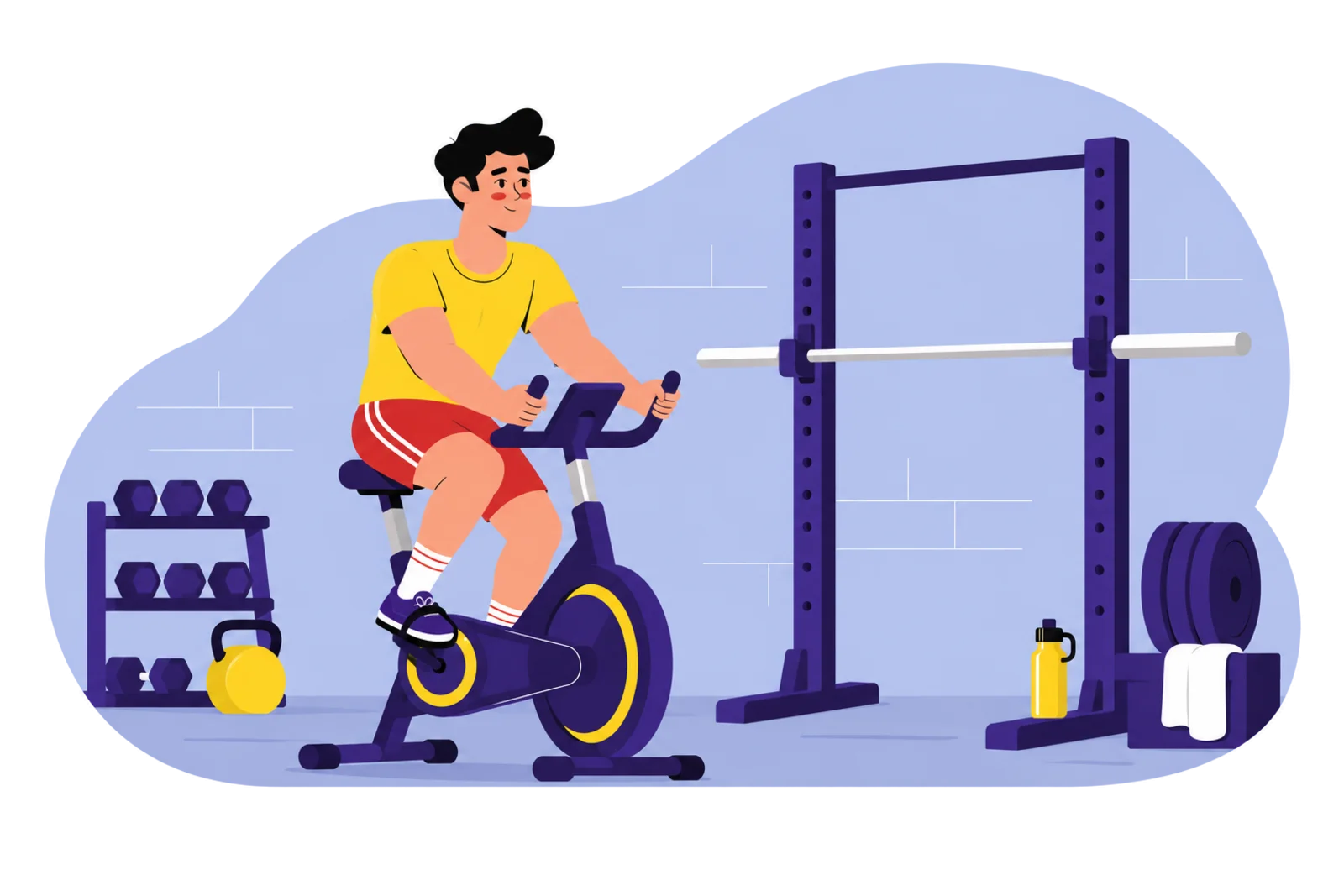
The general part may include a few minutes of easy cycling, walking, or rowing to raise body temperature and make the transition from rest to exercise. The specific part then rehearses the actual movement with lighter loads. For a heavy squat, for example, you might perform bodyweight squats or mobility drills if needed, followed by several progressively heavier warm-up sets before reaching the planned working weight. A small isolation exercise often needs much less preparation.
Performance is the clearest reason to warm up. A systematic review of warm-up research found that most of the studied protocols improved the performance measure that followed, although the protocols and effects varied considerably. More recent evidence also suggests that structured neuromuscular warm-ups may improve some athletic performance measures and may reduce injury risk in certain sports and populations, but the findings are heterogeneous. A warm-up therefore cannot guarantee that an injury will not occur.
The best warm-up is specific to the session, the person, and the conditions. Cold surroundings, a long period of sitting, a technically demanding lift, or a near-maximal load may justify more preparation. If the warm-up reduces speed, strength, or concentration, it was probably too long or too hard. Long static stretching immediately before maximal strength or power work may also be counterproductive; dynamic movement or brief targeted stretching followed by specific sets is usually easier to integrate.
Warm-ups should help you reach the range of motion required for the exercise with controlled form. They are preparation, not a test of conditioning and not a treatment for persistent pain.