Lifting belt
Also known as: Weightlifting belt
A lifting belt is a stiff training accessory worn around the torso so the lifter can brace the abdominal wall against it. It can change trunk pressure, effort, and performance during heavy exercises, but it does not lift the weight or mechanically lock the spine in place.
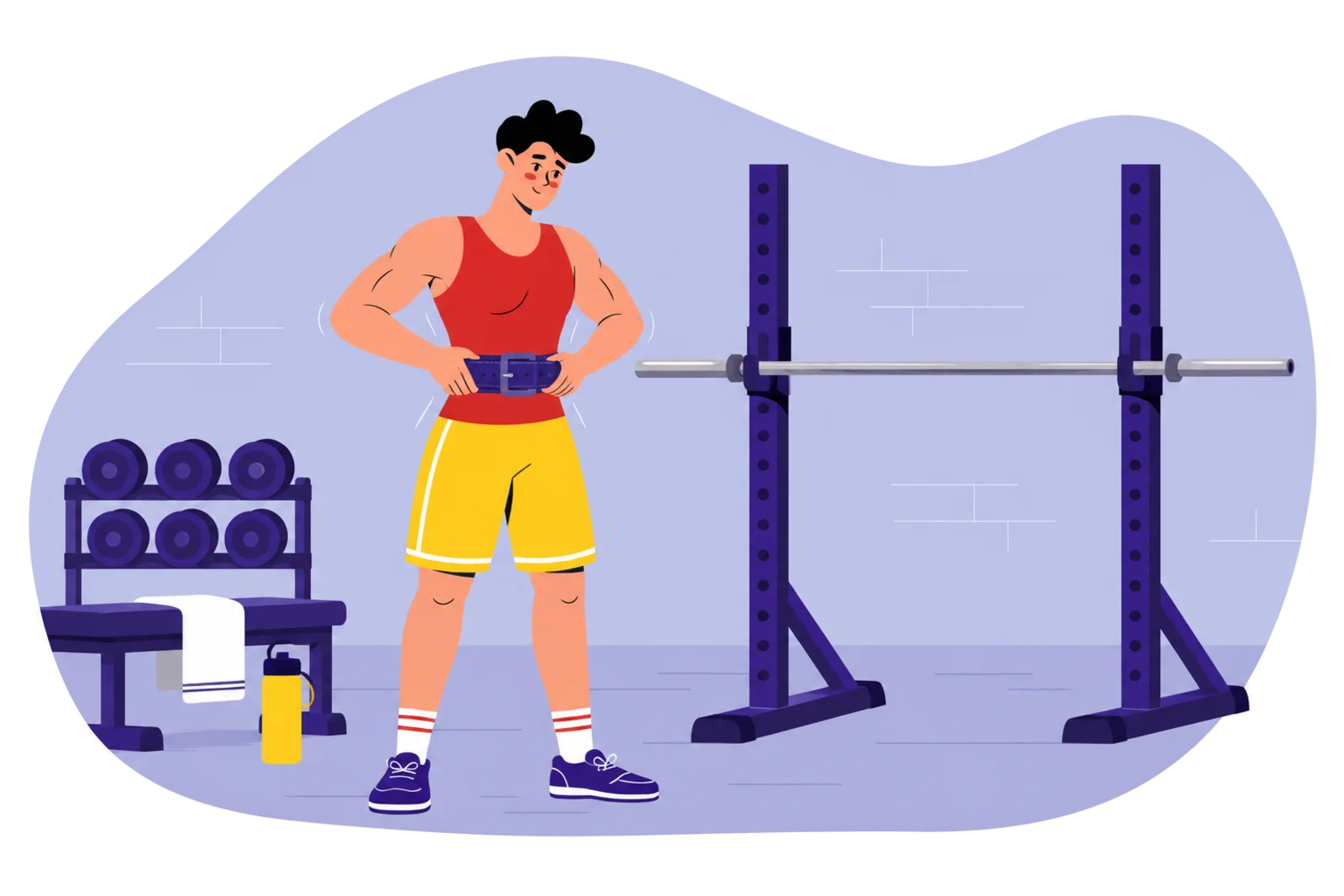
The belt should sit between the ribs and pelvis without pinching at the intended exercise depth. Tightness must still allow the lifter to inhale and expand the trunk around its full circumference. Before a repetition, create deliberate abdominal tension into the front, sides, and back of the belt; merely wearing it loosely provides no equivalent cue. Bracing may be combined with the Valsalva maneuver, but breathing strategy should match the load, duration, and individual's health context.
Belts vary in width, thickness, stiffness, and buckle type. A uniformly thick powerlifting belt may suit squats and deadlifts, while a tapered or more flexible model can leave more room in Olympic lifts. The correct choice is the one that permits the intended form without restricting a needed position. Practice with submaximal weights before relying on a new belt for maximal-strength work.
Acute studies suggest that a belt can improve some lifting outcomes, but effects depend on the task and person. In a 2026 squat study, participants completed more repetitions and moved faster with a belt. They felt more stable, yet force-plate measures did not show improved postural stability. This is evidence about immediate performance in one protocol, not proof that belts prevent injuries or improve every lift.
A belt is optional, including in powerlifting. Learning to brace both with and without one preserves flexibility across exercises and situations. Stop and adjust or remove the belt if it causes sharp pain, numbness, dizziness, or interferes with breathing. Do not use the feeling of support to ignore worsening symptoms or to increase load beyond what can be controlled.