HIT
Also known as: High-intensity training, HIT strength training
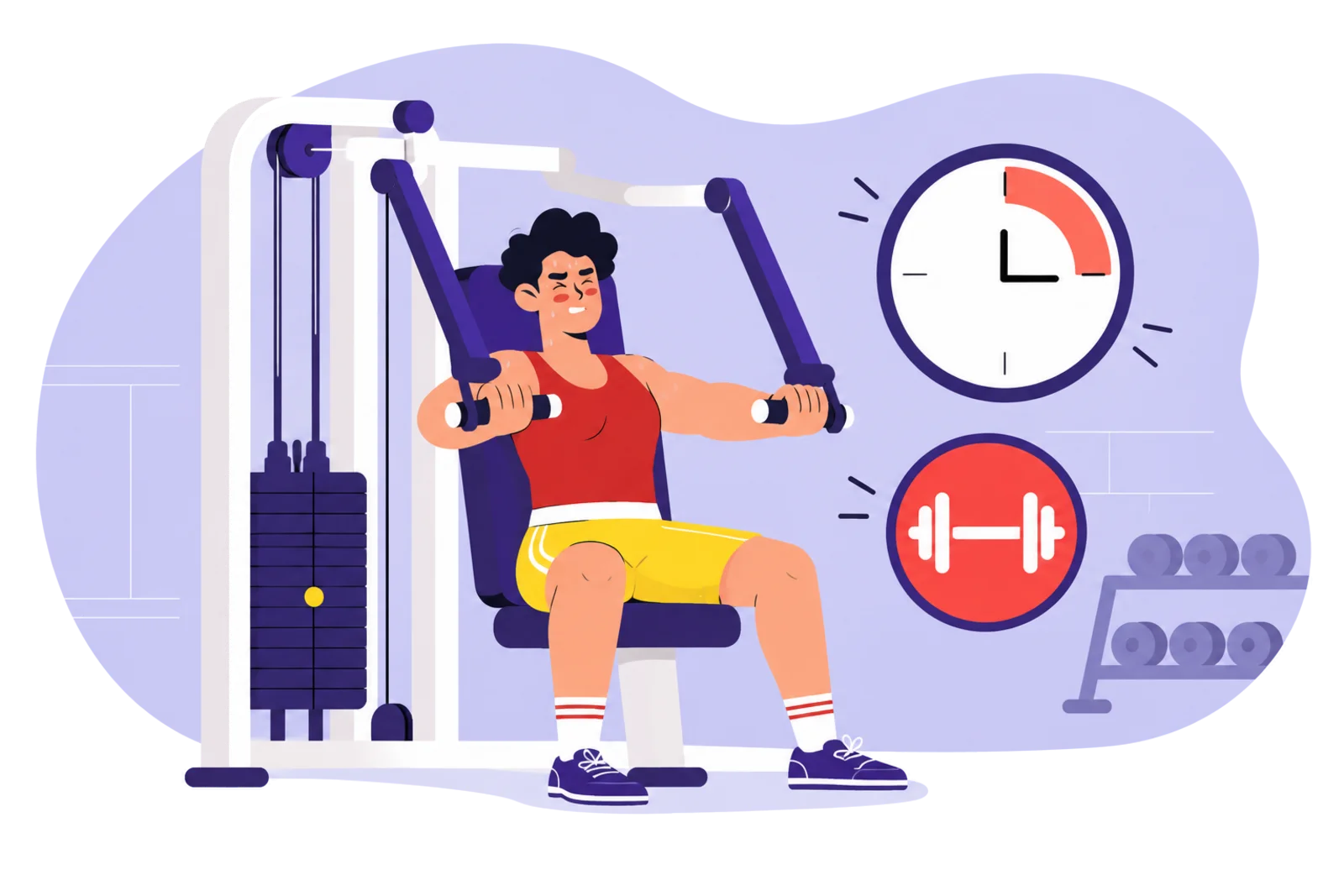
HIT, short for high-intensity training, is a low-volume strength-training approach built around a small number of very demanding sets. Many HIT systems prescribe one working set per exercise after warm-up, controlled repetitions, and training to or very near momentary muscle failure, followed by comparatively infrequent sessions.
In this tradition, "high intensity" usually means a high degree of effort, not necessarily a very heavy percentage of one-repetition maximum. That distinction matters because exercise science often uses intensity to mean load, while training effort describes how close a set is to failure. A moderate weight taken to failure can therefore be HIT even though the external load is not maximal.
HIT is not HIIT. HIIT alternates hard aerobic intervals with recovery. HIT is resistance training and may include long rest intervals between exercises. The names are similar, but the session structures and primary adaptations are different.
There is no single universally accepted HIT program. Variants differ in repetition tempo, exercise selection, progression, session frequency, and whether techniques such as forced or negative repetitions are used. The common thread is an attempt to generate a strong stimulus with little total training volume. That can be time-efficient, but low volume and high effort are separate variables: making every set harder does not automatically replace any amount of volume.
HIT can produce strength and muscle gains, but it has not been shown to be uniquely superior. The 2026 ACSM position stand concluded that resistance training improves strength and hypertrophy across varied prescriptions; training to momentary fatigue did not consistently improve outcomes, while higher weekly volume generally favored hypertrophy. A practical HIT program therefore still needs progressive overload, enough recoverable work for the goal, and a way to adjust when performance stalls or fatigue accumulates.