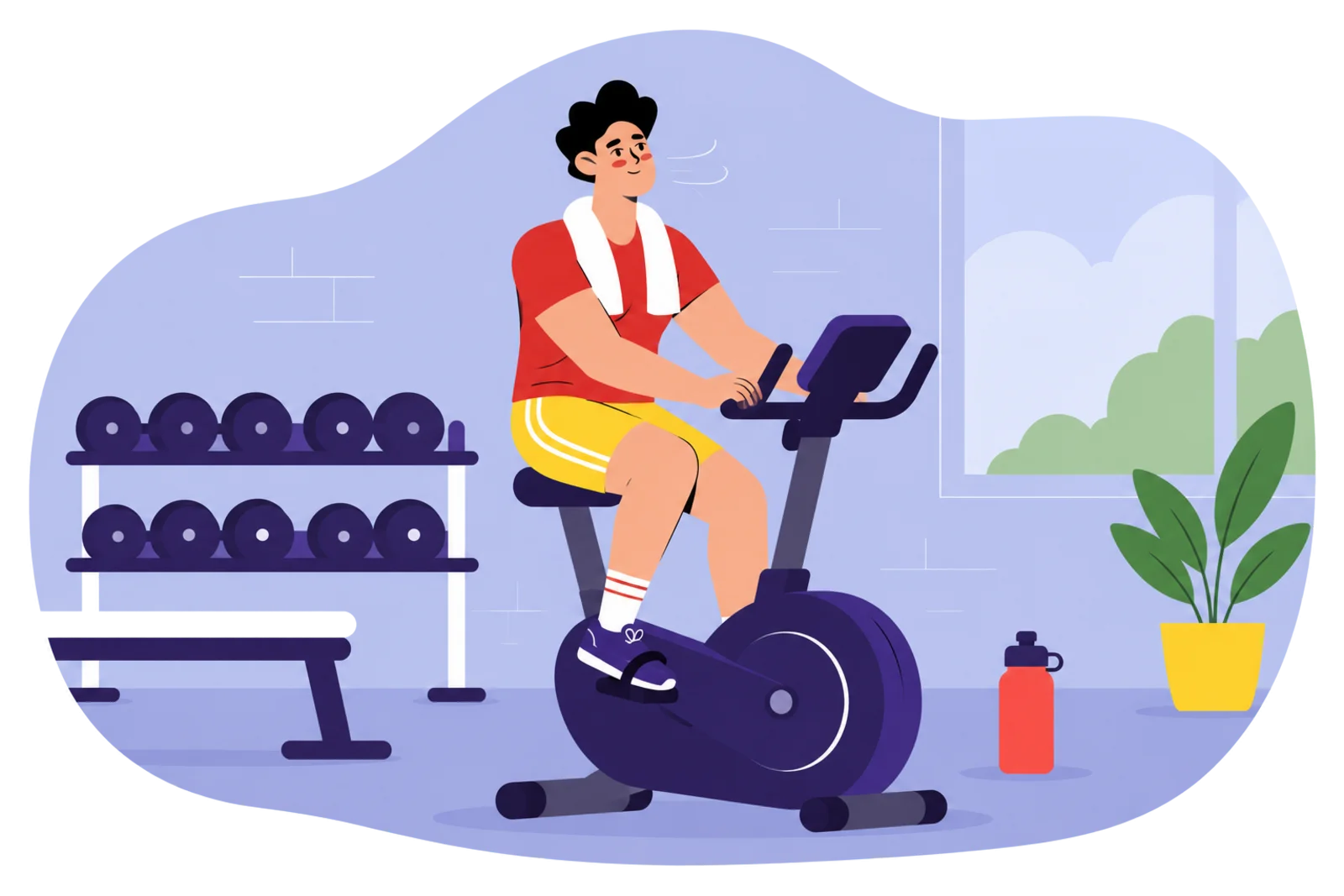
Cool-down
A cool-down is a short, deliberate transition from the main workout back toward rest. It may consist of easy walking, cycling, relaxed breathing, or gentle stretching after the demanding part of a session. Unlike a warm-up, it does not prepare you for subsequent high performance.
An easy cool-down can feel pleasant and lets heart rate and breathing settle while you remain in motion. It may also provide a useful routine for reviewing the session. Those practical reasons are valid, but they should not be confused with proof of faster physiological recovery.
In particular, a cool-down is not required to "flush out" lactate. Light activity can accelerate the decline of blood lactate after hard exercise, but lactate is not the cause of next-day muscle soreness, and faster clearance has not been shown to mean faster recovery. A review of active cool-down research found little evidence for meaningful improvements in soreness, muscle-damage markers, performance recovery, or injury prevention.
Stretching after training can temporarily increase range of motion, but it also does not reliably prevent soreness. A Cochrane review of randomized studies found no clinically important reduction in post-exercise soreness from stretching before or after exercise.
For an ordinary strength session, a cool-down is therefore optional. A few easy minutes may be worthwhile if you enjoy them or prefer a gradual transition, but adding enough extra work to create fatigue defeats the purpose. A cool-down is also different from active recovery, which takes place later as a separate low-intensity activity.