Cardiovascular system
Redirected from "Circulatory system"
Also known as: Circulatory system
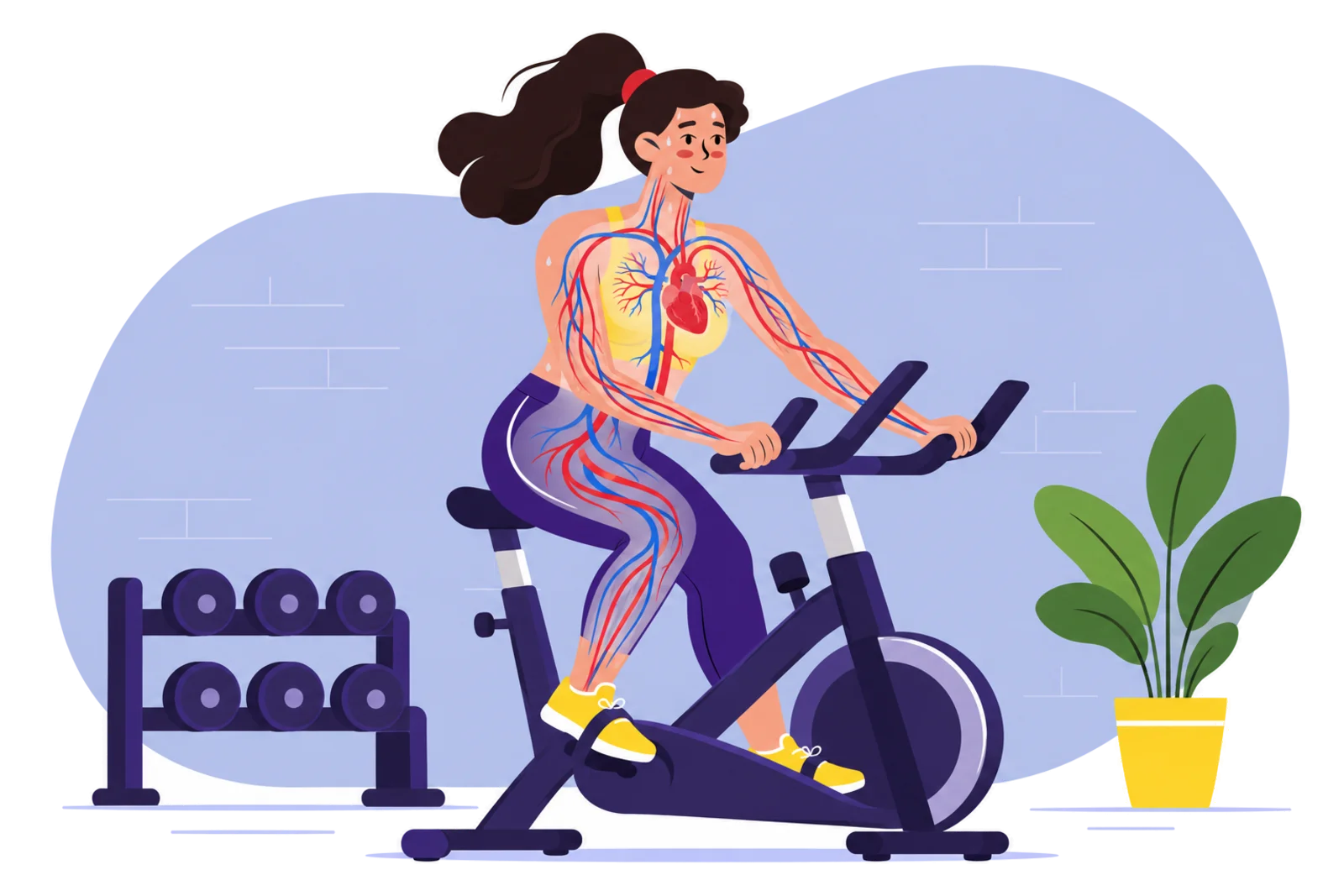
The cardiovascular system, also called the circulatory system, consists of the heart, blood vessels, and circulating blood. It moves blood through pulmonary circulation between the heart and lungs and through systemic circulation between the heart and the rest of the body.
The heart creates flow, arteries carry blood away from it, veins return blood, and capillaries provide the small-vessel network where substances move between blood and tissues. The system delivers oxygen and nutrients, carries carbon dioxide and other metabolic products, transports hormones and immune cells, and helps distribute heat. Blood flow is regulated by both cardiac output—the amount the heart pumps per minute—and changes in vessel diameter. An authoritative cardiovascular physiology overview describes these roles and the different vessel types.
During exercise, heart rate, stroke volume, cardiac output, and the distribution of blood flow adjust to meet changing demand. Dynamic endurance work and resistance exercise both challenge the system, but not in identical ways. During a hard lift, contracting muscles can compress vessels and blood pressure can rise substantially, particularly with high effort and breath holding. The Valsalva maneuver also changes pressure in the chest and circulation; it is not simply a breathing style with no cardiovascular effect.
Repeated cardio can improve capacities such as oxygen delivery and use, while resistance training can also improve cardiovascular health markers. Adaptations remain specific enough that stronger muscles do not automatically imply high aerobic endurance, and a low resting heart rate alone does not summarize cardiovascular health.
The workout pump is a temporary local change in muscle volume and sensation associated with blood flow and fluid shifts. It is not the cardiovascular system "growing" and does not directly measure fitness or muscle hypertrophy. For training purposes, use outcomes that match the goal—such as repeatable pace, power, heart-rate response, or lifting performance—rather than interpreting one pulse reading or a pump in isolation.