Blood sugar level
Also known as: Glycaemia
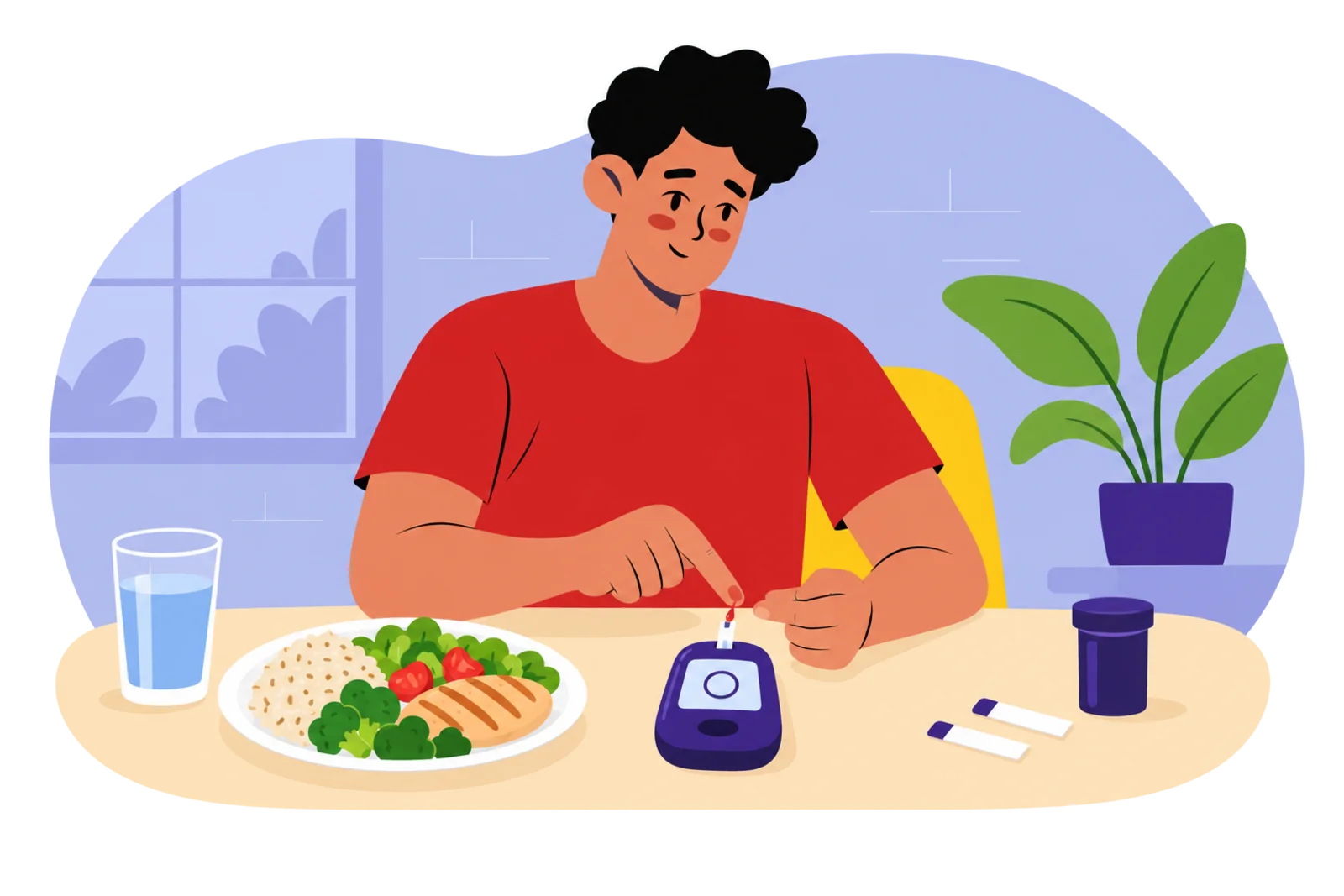
Blood sugar level, or blood glucose, is the concentration of glucose circulating in the blood at a particular time. It is commonly reported in milligrams per deciliter (mg/dL) or millimoles per liter (mmol/L). It is a changing physiological measurement, not a rating of whether a food is healthy.
After a carbohydrate-containing meal, digestion supplies glucose to the bloodstream. Insulin helps tissues take up or store glucose, while the liver can release glucose between meals; muscle stores part of it as glycogen. Meal size and composition, time since eating, exercise, sleep, stress, illness, medication, and individual metabolism can all affect the measured value. A single response therefore cannot be predicted from carbohydrate grams alone.
During and after exercise, working muscle can increase glucose uptake, but the immediate direction and size of the change vary with exercise intensity, duration, prior food, and health status. Regular physical activity can improve blood-glucose management in people with diabetes, as summarized by the US Centers for Disease Control and Prevention. This does not mean every hard set must lower glucose or that a smaller post-meal rise proves a better workout.
Blood glucose is also different from the glycemic index. The index is a standardized property measured for a carbohydrate food under test conditions; blood glucose is the individual's value at a specific moment. Continuous glucose monitors add a time series but measure glucose in interstitial fluid and have delay and measurement error. In people without diabetes, optimizing every small rise has no established role in building muscle.
Symptoms, home meters, or consumer wearables cannot diagnose diabetes. The NIDDK overview of diagnostic tests distinguishes fasting plasma glucose, oral glucose tolerance, and longer-term A1C testing and advises against self-diagnosis. People with diabetes, recurrent low blood glucose, or glucose-lowering medication need individualized advice for strength training, meals, and medication because exercise can alter risk.