Pre-workout
Also known as: Booster, Pre-workout supplement, Pre-workout booster
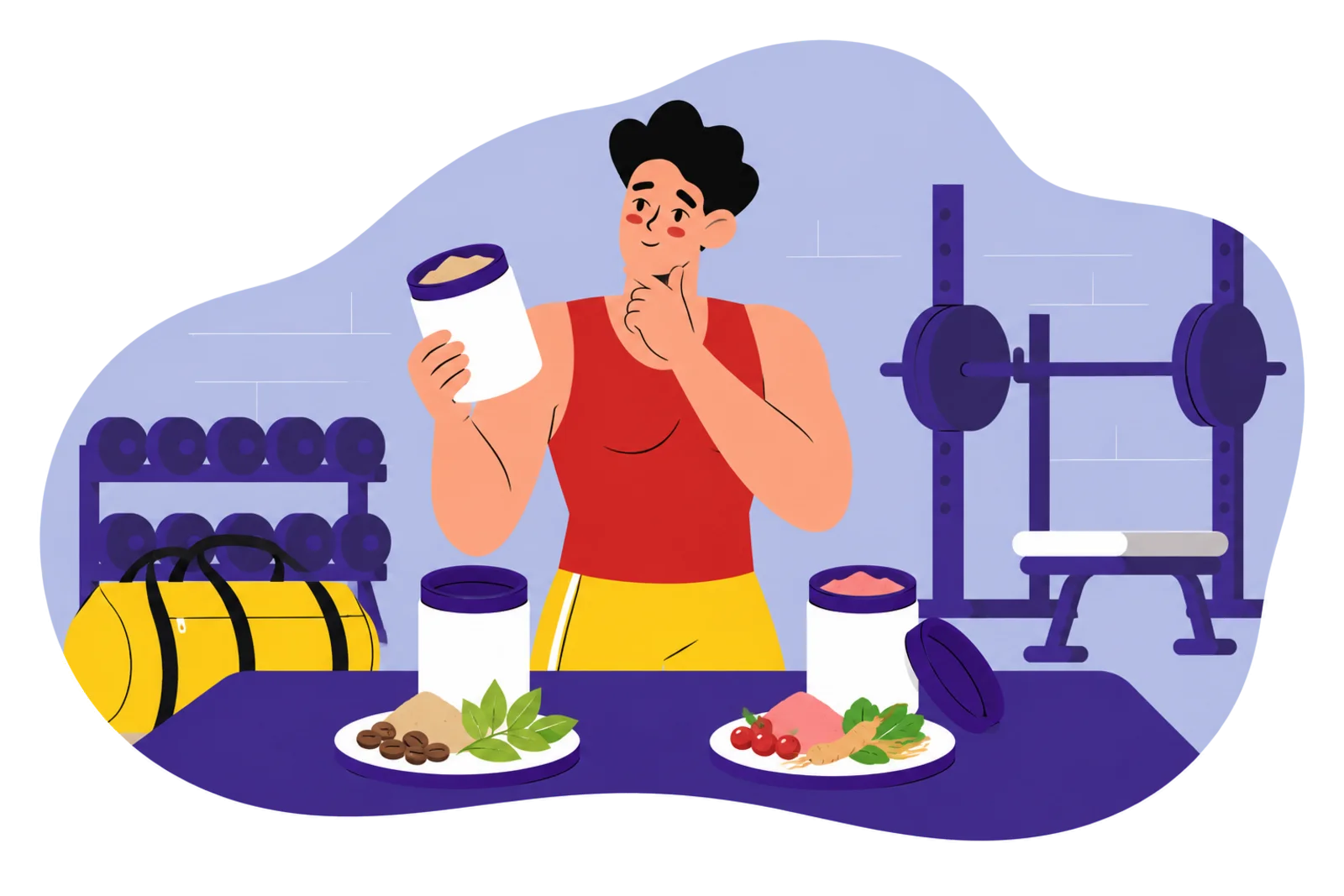
A pre-workout, also called a pre-workout supplement or pre-workout booster, is a product taken before training and marketed to improve energy, focus, blood flow, or performance. It is a product category rather than one defined formula: two pre-workouts can contain entirely different ingredients and amounts.
This distinguishes a pre-workout supplement from pre-workout nutrition, which concerns food, fluid, and nutrient timing. A pre-workout may be stimulant-based, stimulant-free, or a mixture of carbohydrates, amino acids, plant extracts, vitamins, and minerals. "Stimulant-free" only means that specified stimulants are absent; it does not establish that the product is effective or suitable for everyone.
Evidence must be matched to the ingredient, amount, timing, and outcome. Caffeine has relatively strong evidence for some acute performance outcomes, while beta-alanine works through repeated use rather than an immediate pre-workout effect. Citrulline malate has mixed evidence, and an ingredient included below its studied amount cannot be assumed to reproduce a trial. Evidence for one isolated ingredient also does not validate the finished blend, because combinations can change absorption, side effects, and total stimulant exposure.
The most defensible way to evaluate a pre-workout is to read the complete ingredient list and amounts, identify overlap with coffee, energy drinks, medicines, or other supplements, and ask whether the claimed outcome was actually studied. Proprietary blends that hide individual quantities make that assessment difficult. Tingling from beta-alanine, skin flushing from niacin, or a strong stimulant sensation are physiological effects, not proof of more strength, muscle growth, or a better workout.
Risks include sleep disruption, anxiety, palpitations, gastrointestinal symptoms, medication interactions, and accidental stimulant stacking. Product regulation and premarket review differ between countries, and a legal supplement label is not the same as approval of a medicine for efficacy. The IOC supplement consensus concludes that only a limited number of supplements have good evidence in specific settings and highlights contamination and anti-doping risk. Independent batch certification can lower that risk, but it cannot guarantee effectiveness, suitability, or zero contamination.