Weight periodization
Also known as: Load periodization
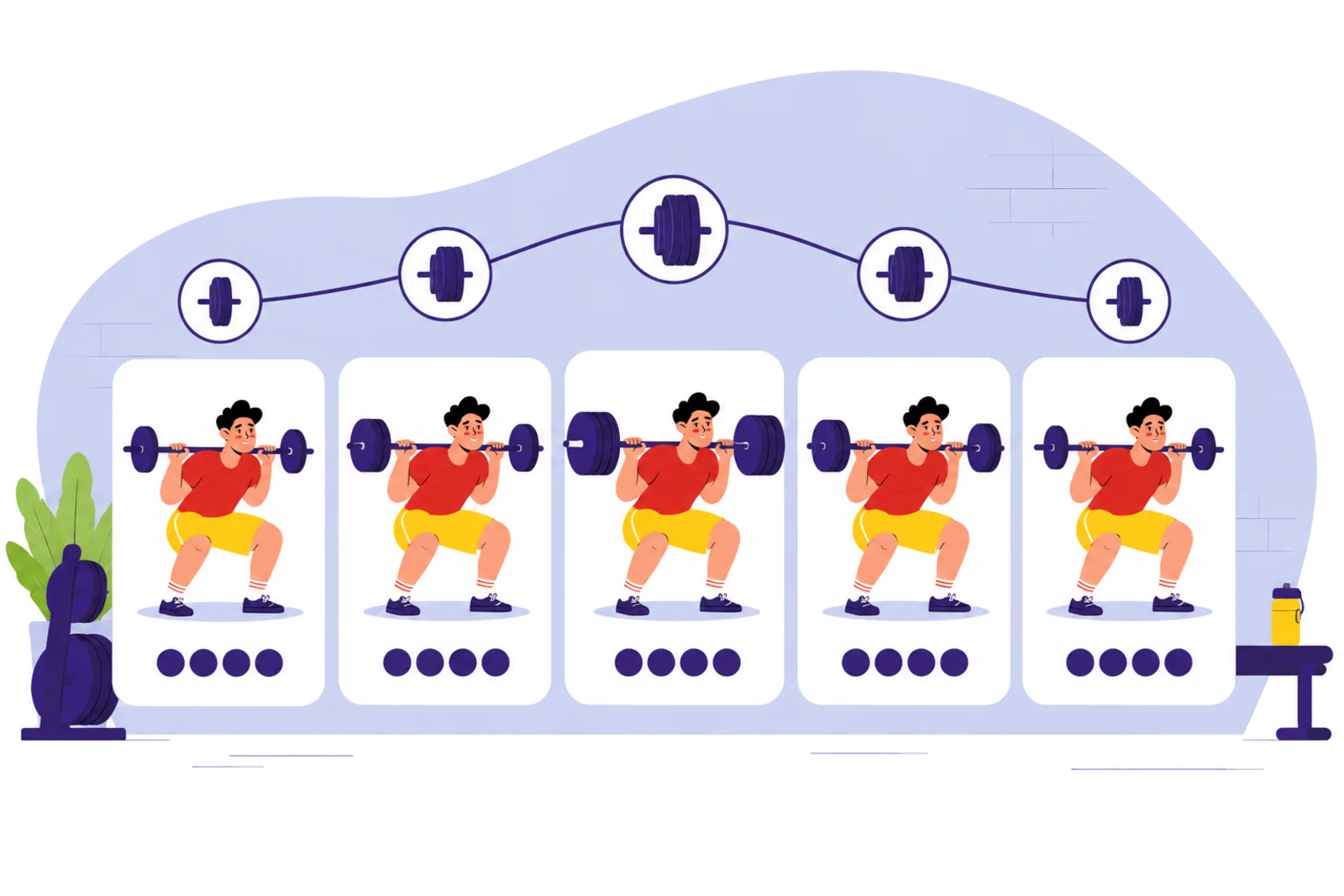
Weight periodization, also called load periodization in resistance training, is the planned variation of external resistance across sessions, weeks, or phases. It focuses specifically on how heavy the prescribed loads are over time, rather than on every component of the training program.
External load can be expressed in kilograms or pounds, as a percentage of a measured or estimated one-repetition maximum, or through a repetition target that implies a load range. A simple sequence might prescribe 70%, 75%, and 80% of one-repetition maximum across three weeks before a lighter week. Another plan may alternate heavy and moderate days. These are examples, not universal templates.
The term is narrower than training load, which can include the amount of work and the athlete’s internal response as well as the weight on the implement. It is also narrower than periodization: a full periodized plan may change sets, repetitions, exercise selection, frequency, and effort even when external load stays similar.
Load periodization can follow a linear model, an undulating model, or another schedule. It should not be confused with progression. Progression raises or refines a demand as performance develops; load periodization can deliberately include heavier, repeated, and lighter exposures even when no new personal best occurs. Likewise, a heavier load does not always mean greater effort if the repetition target falls substantially.
The intended adaptation determines whether increasing load is useful. The 2026 ACSM position stand found that heavier loads tend to favor strength gains, while muscle hypertrophy can occur across varied loading approaches when the broader training stimulus is appropriate. Therefore, continuously raising weight is not the only valid plan, and the heaviest possible session is not automatically the most productive. Load choices must also respect technique, exercise setup, recovery, and the increments actually available.