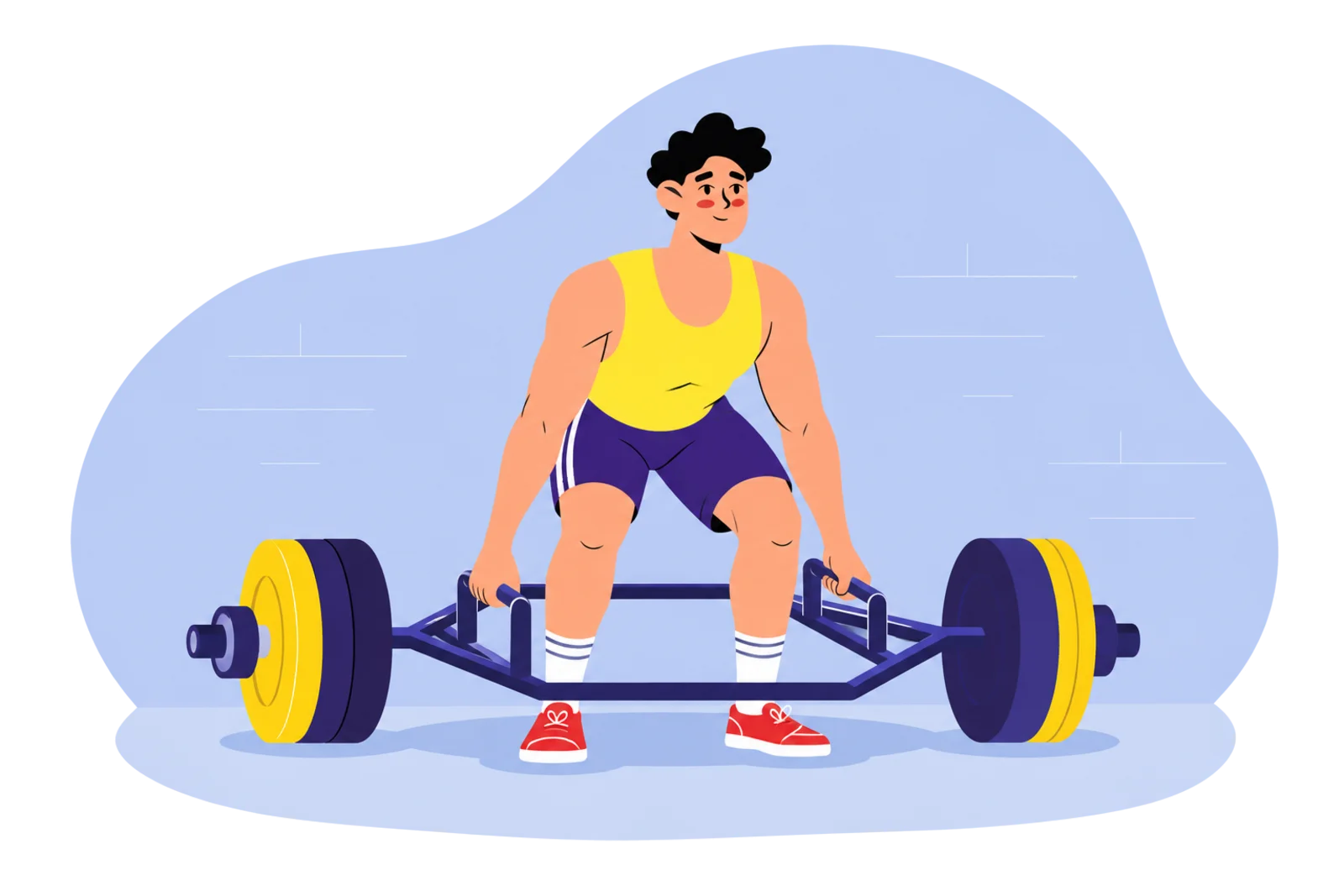
Trap bar
A trap bar, also called a hex bar, is a specialty loadable bar with a frame that surrounds the lifter and handles positioned to the sides. The user typically stands inside the frame, so the load is held beside the body rather than entirely in front as with a straight barbell.
Many models have both low handles near plate height and raised handles that shorten the starting range of motion. Others provide only one position. Frame shape, handle spacing, sleeve length, diameter, and empty-bar mass vary considerably, so a trap bar should be weighed or checked rather than assumed to have a standard mass.
The best-known use is the trap-bar deadlift, but the implement can also be used for carries, shrugs, rows, jumps, and selected pressing variations when the model and space allow. Changing from low to high handles changes the start position, and changing torso and knee angles can shift the demands of the lift. "Trap-bar deadlift" therefore does not describe one identical technique for every person.
Compared with a straight-bar deadlift, the frame permits a different relationship between the body and load. Some lifters can use a more upright torso or more knee contribution, but the outcome depends on handle height, setup, anatomy, and intent. The trap bar is not automatically a safer deadlift, a squat replacement, or a guarantee of less back stress. Comfort and form should be evaluated for the actual variation.
Load it with compatible plates and include the bar's verified mass when logging the total. Available sleeve space and weight increments determine the practical loading options. If the bar is used for jumps or dynamic repetitions, only do so where the equipment and floor are designed for that use and where the landing area is clear.
A trap bar can serve as a main lift or as an accessory implement. Its value comes from how its geometry fits the goal and trainee, not from universal superiority over a straight bar, dumbbells, or machines.