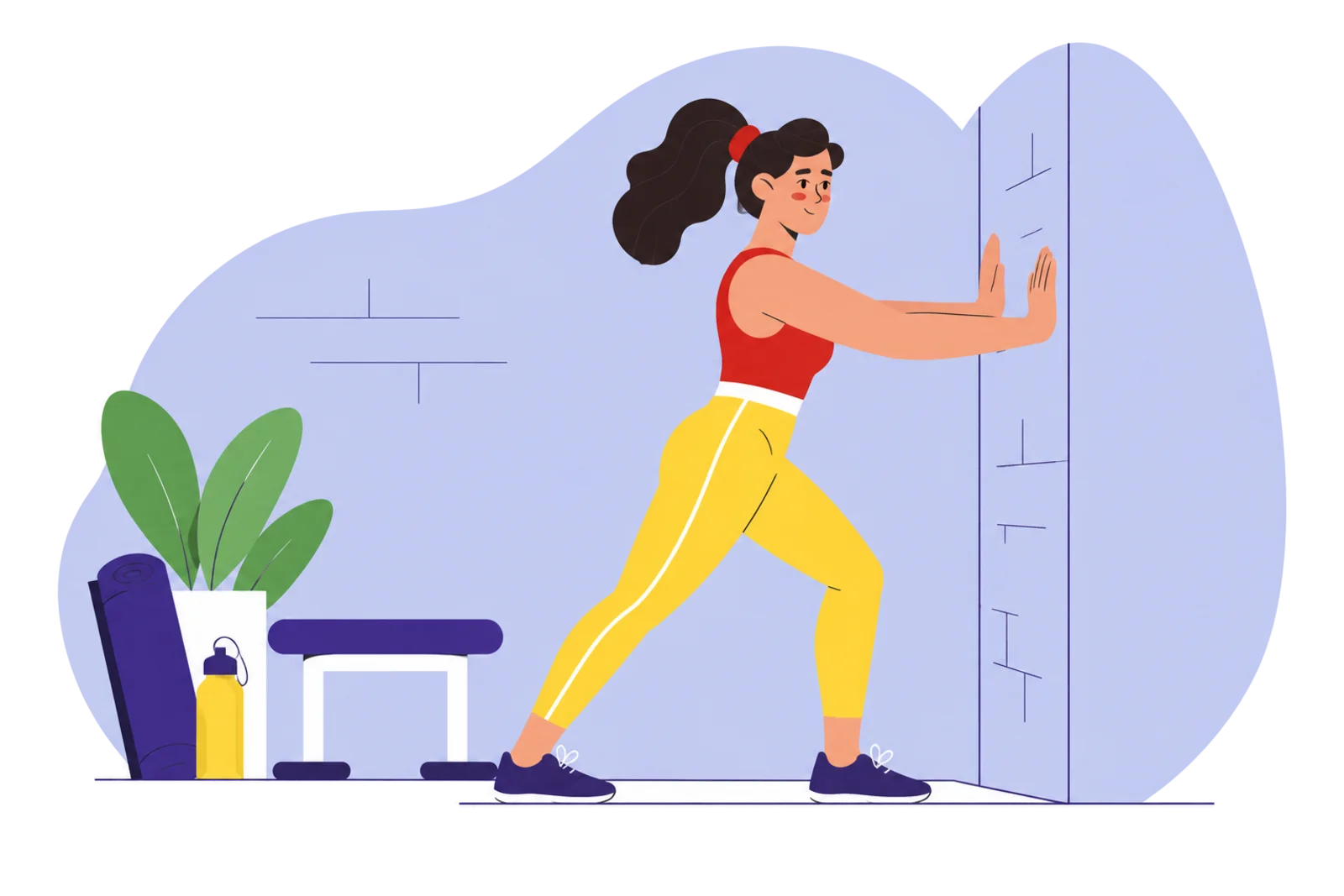
Stretching
Also known as: Stretch, Stretching exercises
Stretching is the deliberate use of positions or movements that take a muscle-tendon unit toward a longer length and a joint toward the end of its available range of motion. It can be used briefly to change range of motion before an activity or practiced repeatedly to develop flexibility over time.
The main methods are static and dynamic stretching. In static stretching, you move into a position and hold it. Dynamic stretching uses controlled repetitions through a range of motion and is often incorporated into a warm-up. Proprioceptive neuromuscular facilitation, or PNF, combines stretching with muscular contractions. Ballistic stretching uses faster bouncing movements and requires more sport-specific judgment.
A muscle can also be stretched while producing force. The bottom of a deep squat, for example, places several muscles at relatively long lengths under load. That is not automatically a dedicated stretching exercise, but strength training through a suitable full range of motion can itself improve joint range of motion.
The timing and dose matter. Static stretching reliably increases range of motion in the short term. Longer, intensive static stretching immediately before maximal strength, sprinting, or jumping can temporarily reduce performance, especially when it is not followed by dynamic or exercise-specific preparation. A large systematic review found that performance effects depended strongly on stretch type, duration, and the activity that followed. Brief targeted holds are less likely to matter than prolonged stretching of the muscles you are about to train hard.
Repeated stretching over weeks can improve range of motion. A 2024 meta-analysis found a moderate average improvement, although results differed across protocols and people. Dedicated stretching is not the only route: resistance training through a broad, controlled range can produce similar improvements for many healthy adults.
Stretching should not be sold as automatic injury prevention or a cure for muscle soreness. A Cochrane review found that stretching before or after exercise did not meaningfully reduce next-day soreness, and injury findings across the wider literature depend on the activity and program. Use stretching when a particular range is useful to you, and keep the sensation controlled rather than forcing sharp pain or joint instability.