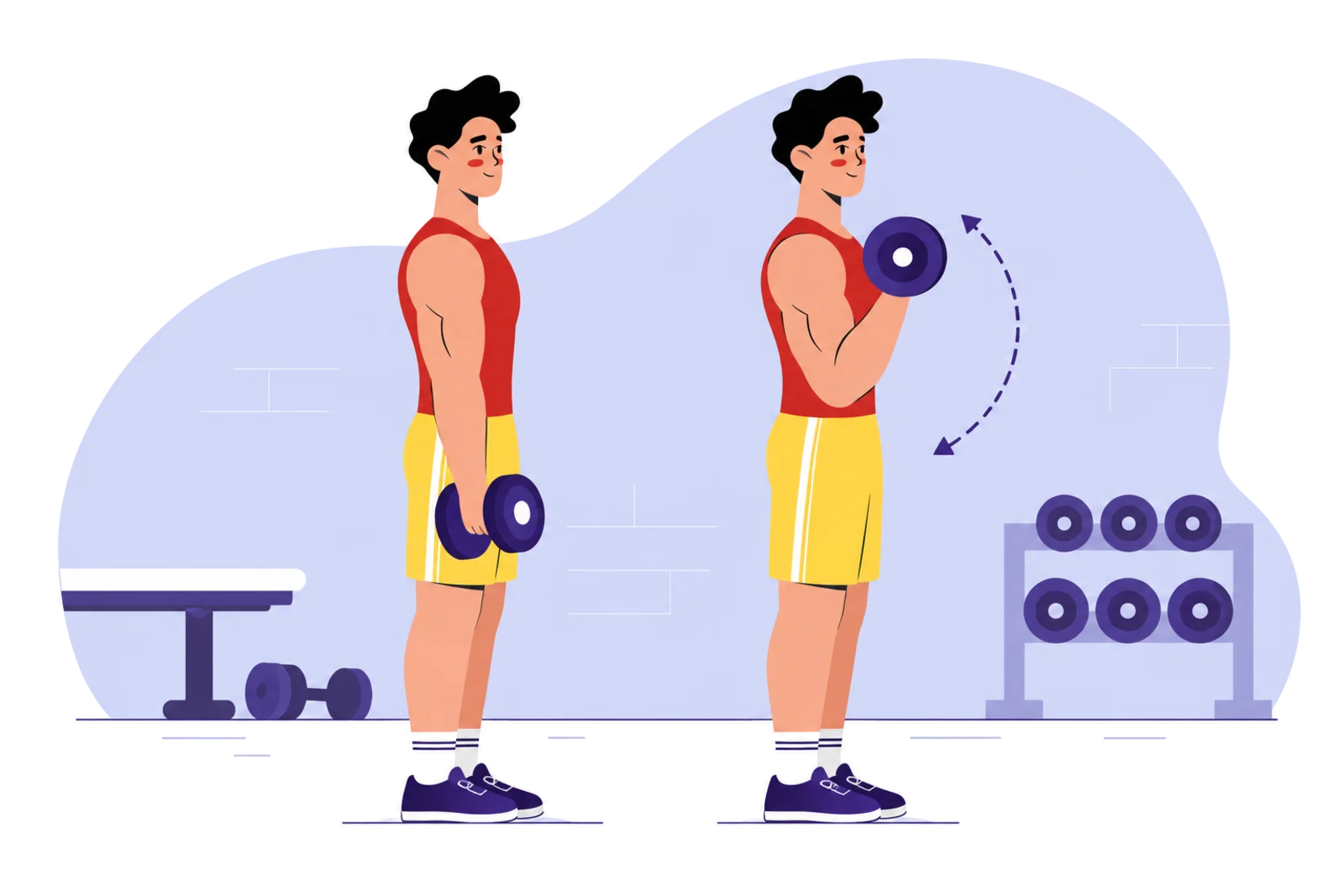
Reps
Also known as: Repetitions
A repetition, usually shortened to rep, is one complete performance of an exercise movement. In a squat, one rep typically runs from the standing start position through the descent and ascent back to standing. The intended range of motion and technique determine where a repetition begins and ends.
Reps are counted within sets. If a program prescribes three sets of ten reps, the target is ten complete repetitions before each rest period. The completed count may differ from the target when fatigue, load, or a deliberate stopping rule intervenes. Partial repetitions, assisted repetitions, and failed attempts should be identified separately when consistent tracking matters; simply recording "10 reps" can otherwise hide meaningful differences between sessions.
Rep count alone does not reveal how demanding a set was. Eight reps with a load you could lift only eight or nine times are very different from eight reps with a load you could lift twenty times. Load, effort level, technique, and repetition speed all add context. Likewise, a slower rep tempo changes how long the set lasts but does not turn one repetition into several.
A rep range gives a lower and upper target rather than a single fixed number, while a repetition maximum describes the greatest load someone can lift for a specified number of repetitions under defined conditions. These concepts should not be confused: "8–12 reps" is a programming range; "10RM" is a load-performance limit for ten reps.
Accurate rep tracking makes progression easier to interpret. Use the same movement standard from one workout to the next, and record a repetition only when it meets the technique and range-of-motion criteria chosen for that exercise. This matters more than forcing the counter upward with increasingly different reps.