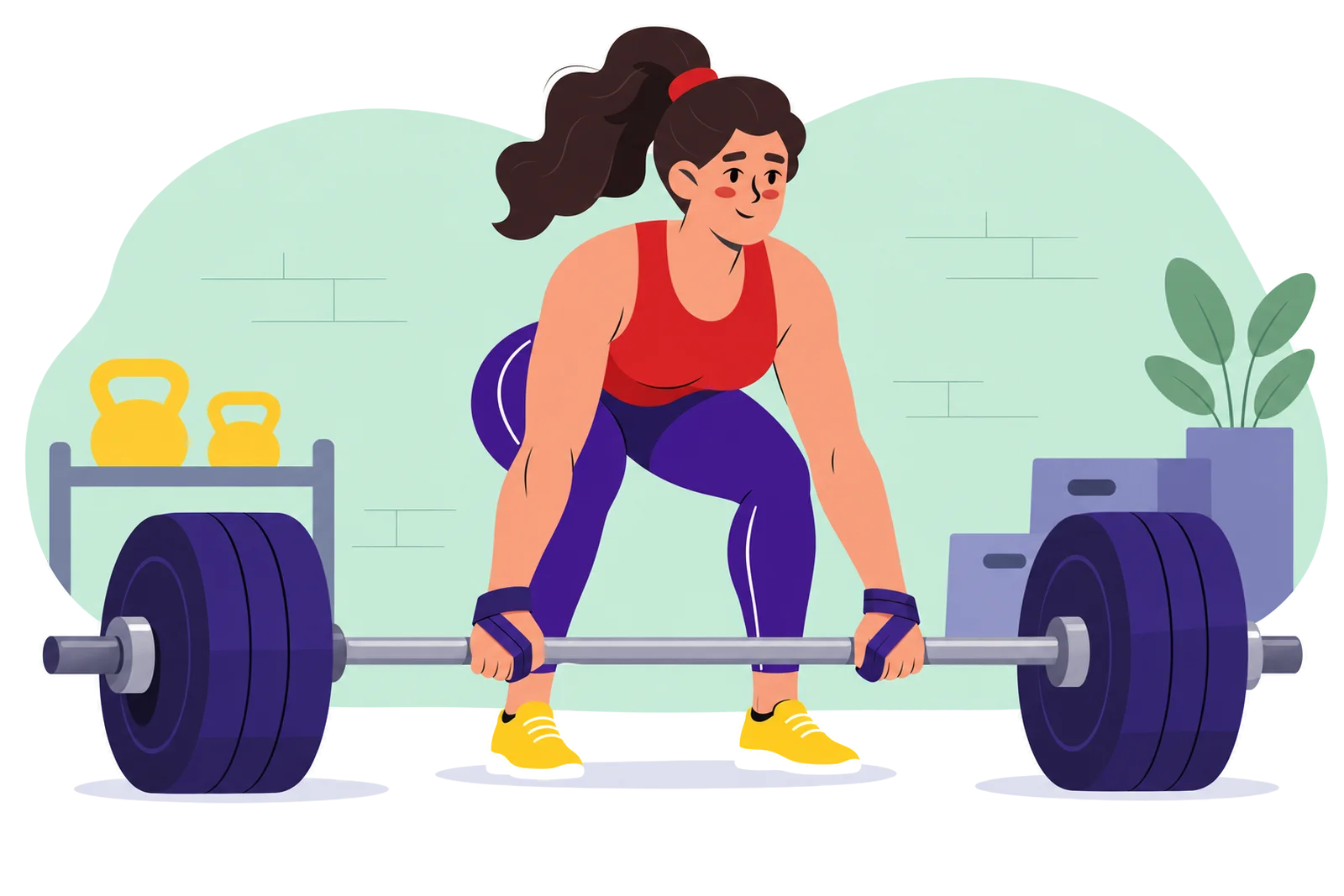
Lifting straps
Lifting straps are bands that connect the hands or wrists to a bar, handle, or other implement during pulling exercises. By resisting the implement's tendency to roll out of the fingers, they can reduce the amount of unsupported grip force needed to hold the load.
Common designs include lasso straps, closed-loop or figure-eight straps, and straps with hooks. They differ in how tightly they connect the lifter to the implement and how quickly they can be released. Lifting straps are not wrist wraps: wrist wraps support or limit wrist motion during pressing and other lifts, whereas straps assist the connection to a pulling implement.
Straps can be useful when grip would end a set before the intended target muscle reaches the planned effort, as may happen during rows, pulldowns, shrugs, or deadlift variations. They do not make the external weight lighter and do not remove all work from the forearms. Their effect depends on the strap, wrapping direction, handle, exercise, and how firmly the person still grips.
Whether to use them depends on the goal. If grip strength is being tested or trained, straps can hide the limiting factor. If the goal is to load larger pulling muscles or accumulate work without grip ending every set, they may be appropriate for selected sets. A mixed grip, hook grip, and chalk change grip demands in different ways and are not interchangeable with straps.
Learn the wrapping and release method with a light load before using heavy weight. Some designs, especially figure-eight styles, keep the lifter connected to the bar longer and may make abandoning a failed repetition more difficult. Follow the equipment instructions, keep material away from moving machine parts, and use safeties where relevant. Straps do not guarantee that a weight cannot slip or that an exercise is injury-free.
Using straps on some sets does not automatically weaken grip, just as avoiding them does not ensure grip development. The long-term effect depends on how much unassisted gripping remains in the program and whether grip performance is trained progressively.