Gym chalk
Also known as: Chalk, Lifting chalk
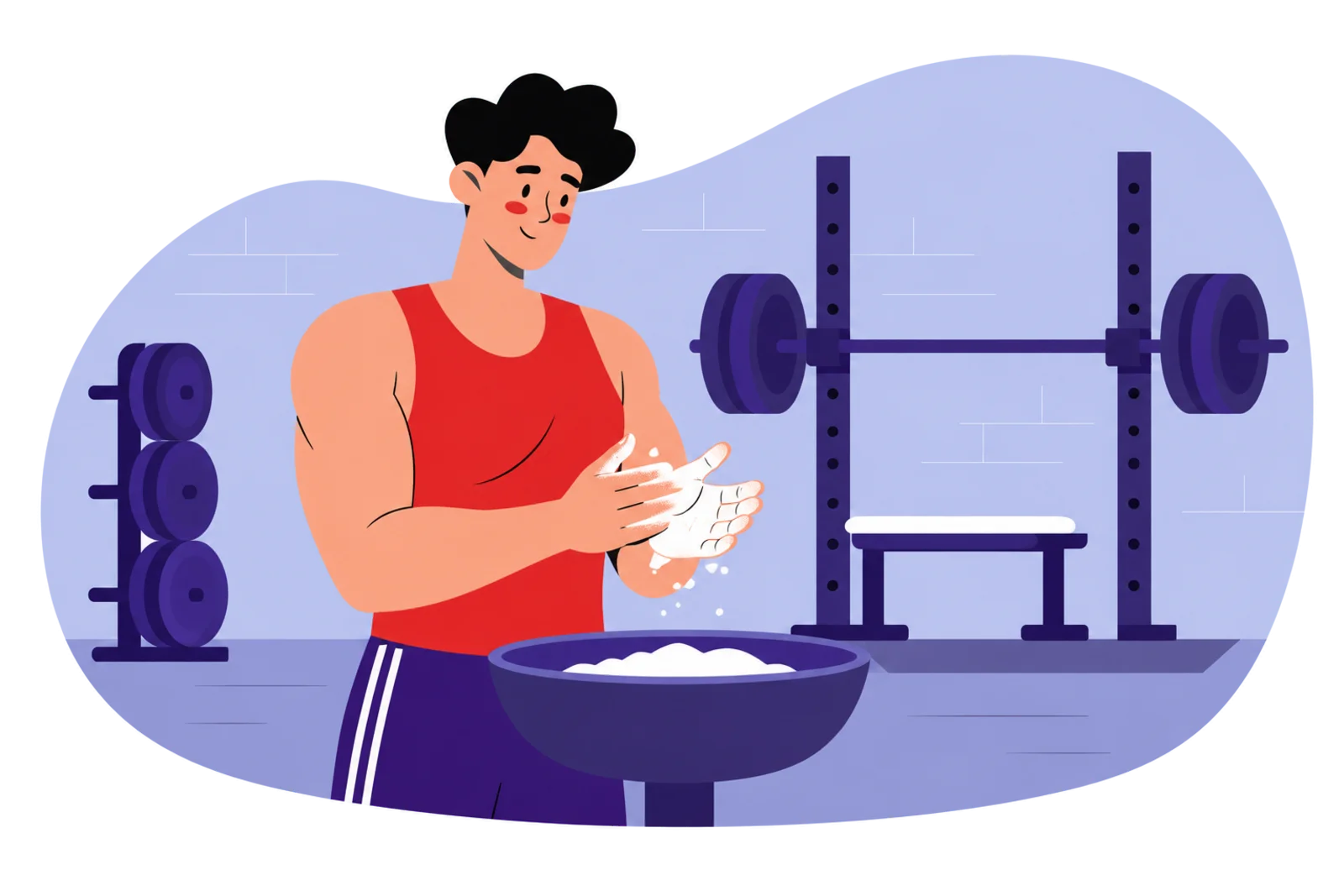
Gym chalk is a magnesium-carbonate product applied to the hands to manage moisture and change friction between skin and training equipment. It is used in weightlifting, powerlifting, gymnastics, climbing, and other grip-dependent activities. It differs from ordinary blackboard chalk, which is commonly based on calcium carbonate or gypsum.
Chalk is sold as blocks, loose powder, chalk balls, and liquid chalk. Liquid products suspend magnesium carbonate in a fast-evaporating carrier and may contain additional ingredients, so their feel and suitability vary. A thin, even layer on the contact areas is usually enough; excess powder can reduce tactile feedback, spread through the room, and make equipment harder to clean.
Chalk does not increase the underlying muscular strength of the hand. It may help when sweat or a smooth surface is the main reason a barbell or dumbbell slips, but the result is task- and condition-specific. In a small study of nine recreationally trained climbers, chalk increased repetitions in two specific weight-assisted pull-up grip tests. That narrow result should not be generalized to every implement, exercise, or safety outcome.
Unlike lifting straps, chalk does not connect the wrist to the implement. It can be combined with an overhand grip, hook grip, or mixed grip, provided the sport and facility allow it. If the limiting factor is finger force rather than moisture or friction, adding more chalk may not solve the problem.
Follow the gym's rules: some facilities prohibit loose chalk but permit liquid products, while others provide designated areas and cleaning equipment. Avoid creating airborne clouds, contact with the eyes, and application over open or irritated skin. Clean shared handles after use when required. A drier grip may reduce one route by which an implement slips, but it cannot guarantee control, correct technique, or freedom from injury.