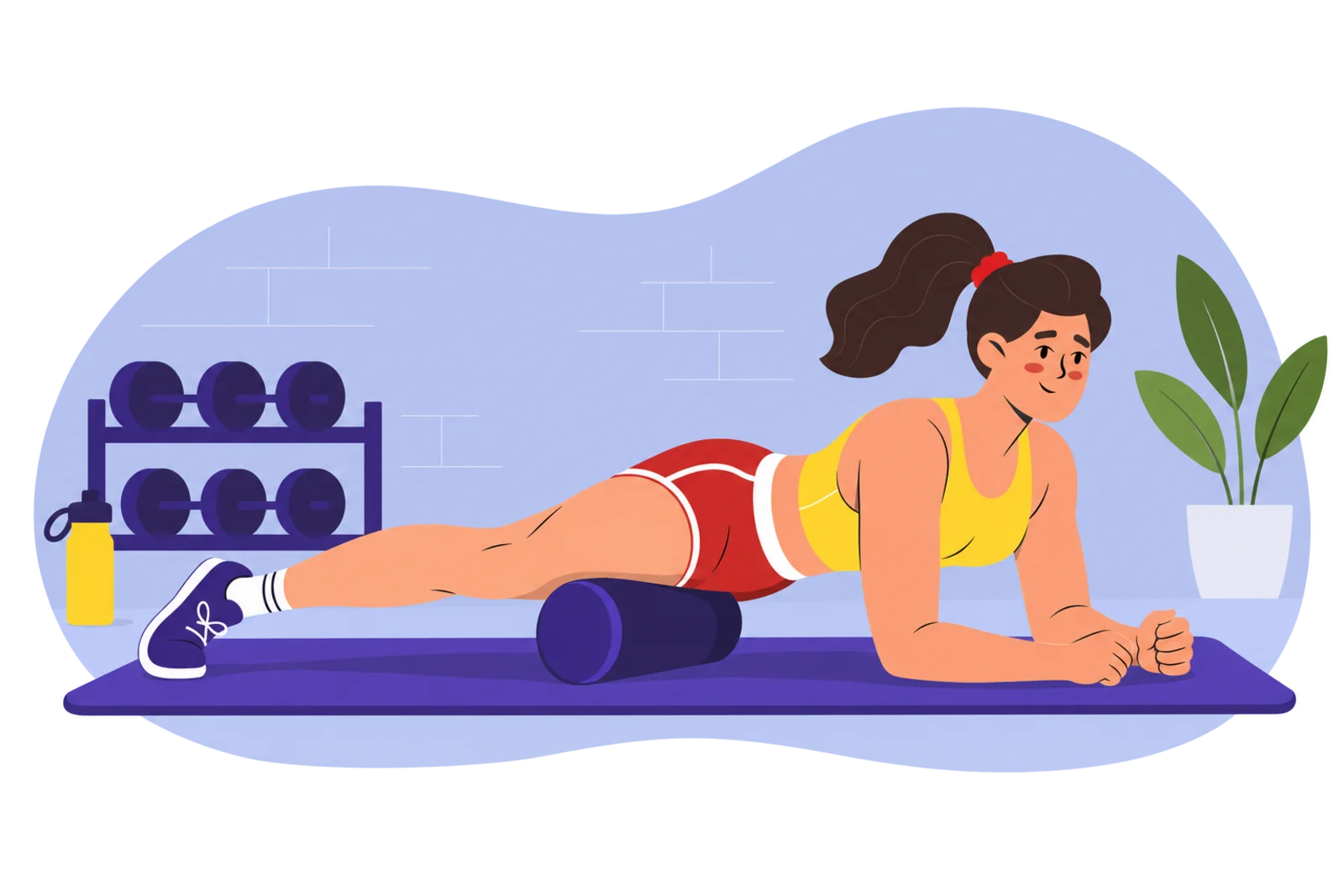
Foam roller
A foam roller is a cylindrical tool used for self-massage by placing a body area on the roller and moving it under controlled pressure. The practice is often called foam rolling or self-myofascial release. That label does not mean the roller literally separates fascia, breaks up scar tissue, or flushes toxins from muscle.
Foam rolling can temporarily increase range of motion and may be included in a warm-up when a specific restriction affects the planned exercise. A 2020 systematic review and meta-analysis found an immediate improvement in joint ROM compared with no exercise, but no advantage over stretching. A later 2024 review in athletes likewise reported generally positive acute effects on flexibility and perceived recovery without a consistent loss of maximal strength or power; methods and doses varied across studies.
Use enough pressure to create a tolerable massage sensation, not sharp or escalating pain. Move slowly over the intended muscle region, or pause briefly on a sensitive area while breathing normally. Avoid rolling directly over bones, the front or side of the neck, a recently injured area, an open wound, or a joint that is not meant to bear that pressure. More force and a harder roller are not automatically more effective.
As a recovery practice, foam rolling may modestly reduce the perception of muscle soreness for some people, but it does not prove faster tissue repair or restored performance. Feeling looser immediately afterward is also not a permanent structural change. Judge its value by whether it improves the intended movement, comfort, or readiness enough to justify the time.
A roller is optional. It does not replace progressive mobility training, appropriately loaded strength work, sleep, nutrition, or assessment of persistent symptoms. New swelling, bruising, numbness, unexplained severe pain, or symptoms after an injury call for an appropriate professional evaluation rather than more pressure with the roller.