Eccentric phase
Redirected from "Negative phase"
Also known as: Negative phase
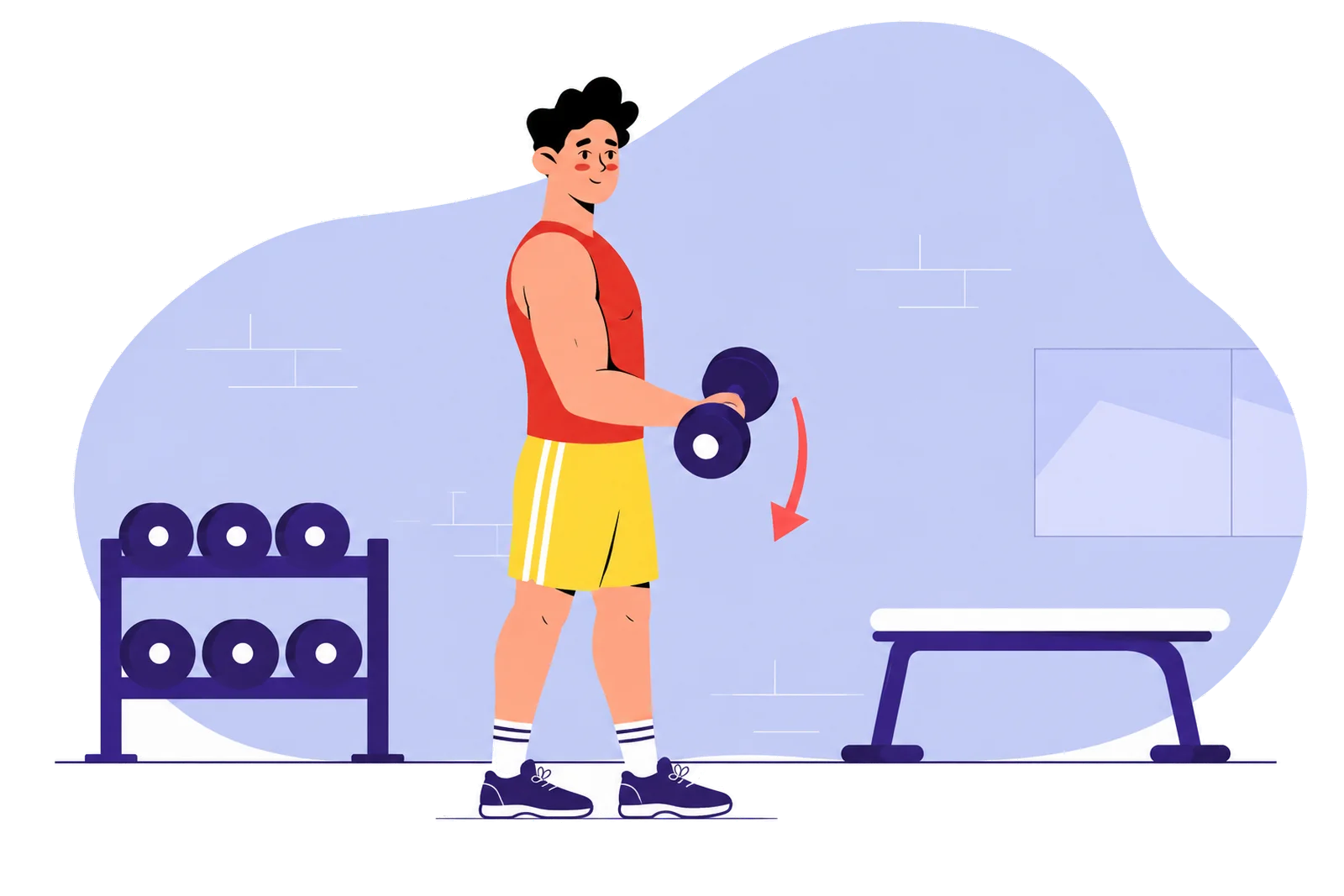
The eccentric phase is the part of a movement in which an active muscle produces force while lengthening overall. It is commonly called the lowering or negative phase. Examples include descending in a squat, lowering a dumbbell in a curl, or returning a lat-pulldown handle upward under control.
Direction alone does not define the phase. Moving a weight downward is often eccentric for the muscles resisting gravity, but pulling a cable downward can be concentric for the target muscles. The relevant question is whether the active muscle is lengthening while it controls force. Joint motion and the roles of different muscles determine the answer.
Most dynamic repetitions contain both an eccentric and a concentric phase. That makes ordinary controlled lowering different from negative reps, an intensity technique that emphasizes eccentric-only or eccentric-overload work, often with assistance during the lifting phase. A slow eccentric is also not automatically a negative rep; it is simply one possible rep-tempo choice.
Muscles can generally resist more force eccentrically than they can produce concentrically, which allows specialized overload but also requires suitable equipment and assistance. The 2026 ACSM position stand found an average hypertrophy benefit from eccentric overload in the evidence it reviewed. This does not mean that every repetition needs eccentric overload or that ordinary concentric-eccentric training is inadequate.
Unfamiliar or high-volume eccentric work can cause substantial muscle damage, soreness, and temporary strength loss. Those effects usually decrease with repeated exposure and are not proof of a superior growth stimulus. Introduce unusually slow, overloaded, or lengthened eccentric work gradually, preserve control through the chosen range, and use assistance that can safely handle the load.