Negative reps
Also known as: Eccentric-overload reps
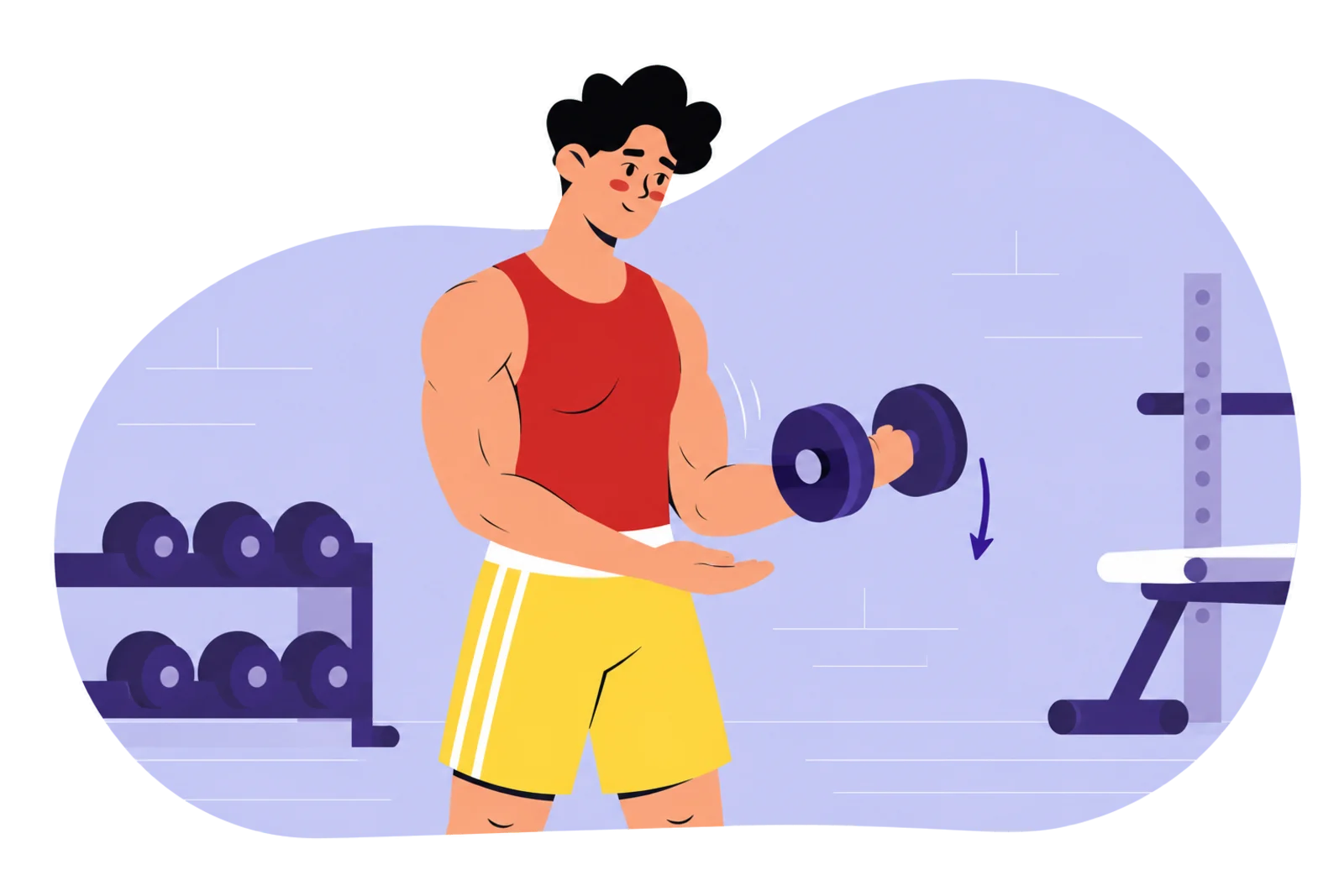
Negative reps, or eccentric-overload repetitions, are repetitions in which the lowering phase is loaded more heavily than the trainee can lift concentrically without assistance. A spotter, specialized machine, weight releaser, or two-limb-up/one-limb-down setup helps position or raise the resistance, while the trainee controls the overloaded eccentric phase.
Every dynamic repetition already has an eccentric and a concentric portion, so simply lowering a normal training load does not make it a negative rep. Deliberately lowering the same load more slowly changes repetition tempo, but it is not necessarily eccentric overload. The defining feature is greater external demand during the lowering action than during the lifting action, or an eccentric load that exceeds the person's unaided concentric capacity in that movement.
Eccentric-overload methods can expose the muscles to high forces and may be useful when that specific capability is the goal. However, more load, soreness, or muscle damage does not establish superior hypertrophy. A 2026 systematic review and meta-analysis found that accentuated eccentric loading increased the eccentric stimulus and effort but produced broadly similar chronic strength and muscle-architecture outcomes to constant-load training. The authors also noted a likely need for more recovery. Protocols and equipment differed across studies, so the result does not mean every negative-rep setup is equivalent.
This technique has practical safety requirements. The method of raising or removing the extra load must be planned before the set, and any spotter must understand exactly when and how to assist. Exercises where a failed lowering phase could trap the lifter are poor choices without suitable safety equipment. Beginners generally benefit more from learning controlled ordinary repetitions before considering eccentric overload.
Use a limited, predetermined number of controlled repetitions and stop at technical failure, not after control is lost. Record the eccentric and concentric loads separately, along with assistance and tempo; otherwise the performance cannot be compared reliably. Account for the unfamiliar loading and recovery demand in fatigue management rather than adding negative reps casually at the end of already demanding work.