Diet break
Redirected from "Maintenance break"
Also known as: Maintenance break
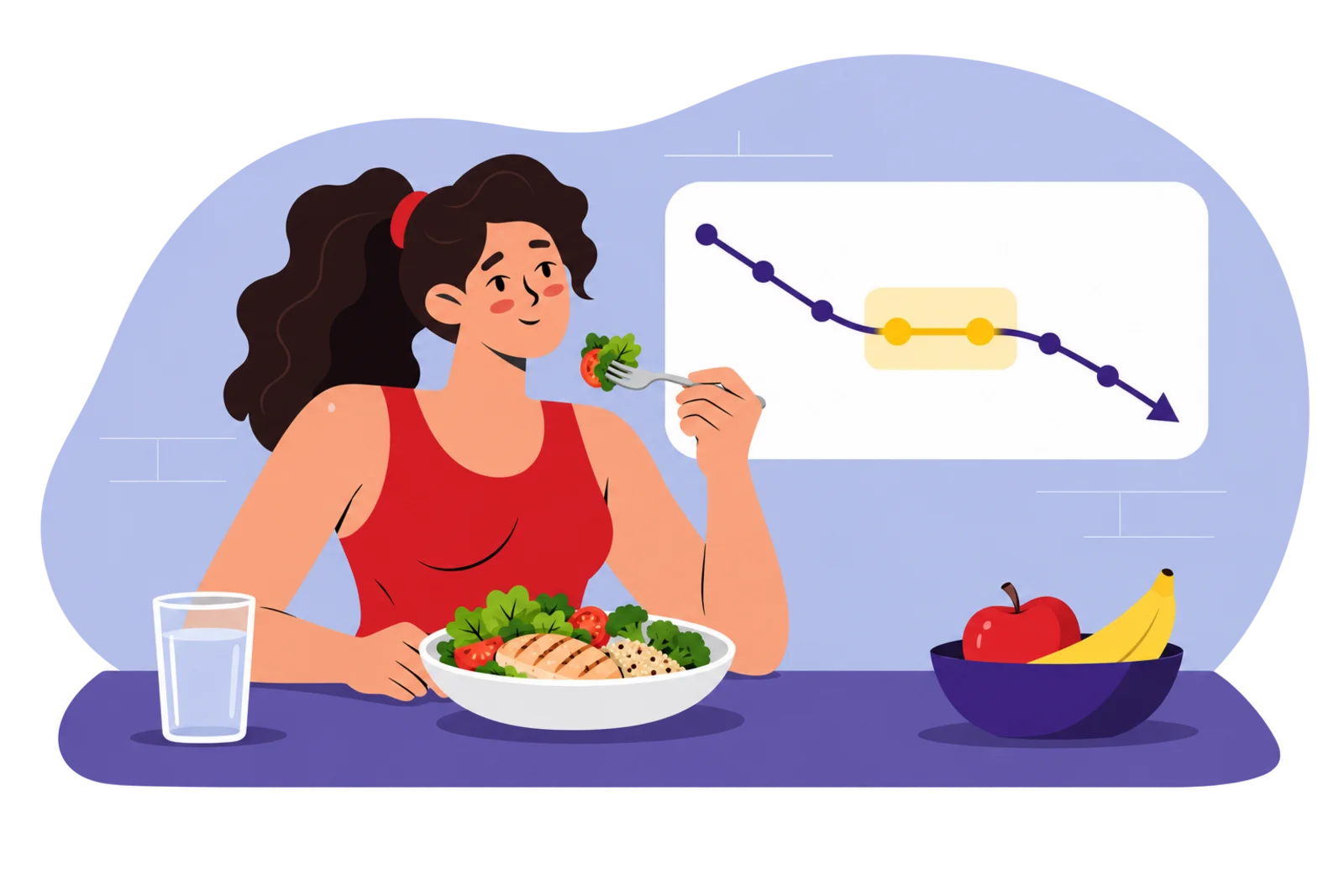
A diet break is a planned period during a fat-loss diet in which calorie intake returns to estimated maintenance before the calorie deficit resumes. It usually lasts several days to about two weeks. The aim is to pause energy restriction, not to abandon the overall plan.
That makes a diet break different from a refeed, which is generally shorter and often emphasizes carbohydrates, and from a reverse diet, which gradually raises intake after a dieting phase. It is also more structured than a cheat day: calories are normally brought to maintenance, not left unlimited.
During a break, keeping protein intake and resistance training broadly consistent makes the surrounding weeks easier to compare. Extra carbohydrate can restore some glycogen, and the associated water plus a larger amount of food in the digestive tract can raise scale weight quickly. That short-term change does not by itself show equivalent fat gain. Maintenance is an estimate, however, so intake and the multi-day weight trend still matter.
Diet breaks may provide relief from hunger, irritability, or the practical burden of dieting, but they are not a metabolic reset. A systematic review of 12 randomized trials found similar body-composition changes with intermittent breaks and continuous restriction overall. Resting metabolic rate declined less with breaks on average, but this effect was clearer in participants with overweight or obesity than in resistance-trained participants. A separate trial in resistance-trained women found no advantage for body composition or resting metabolic rate.
A break therefore earns its place when it improves adherence, training experience, or quality of life—not because it guarantees faster fat loss or prevents muscle loss. It also extends the calendar time needed to accumulate the same total deficit. Persistent fatigue, menstrual disruption, recurrent bingeing, or other signs that a cut is becoming harmful call for reassessing the diet, not simply scheduling another break.