Workout plan generator
Also known as: Training plan generator
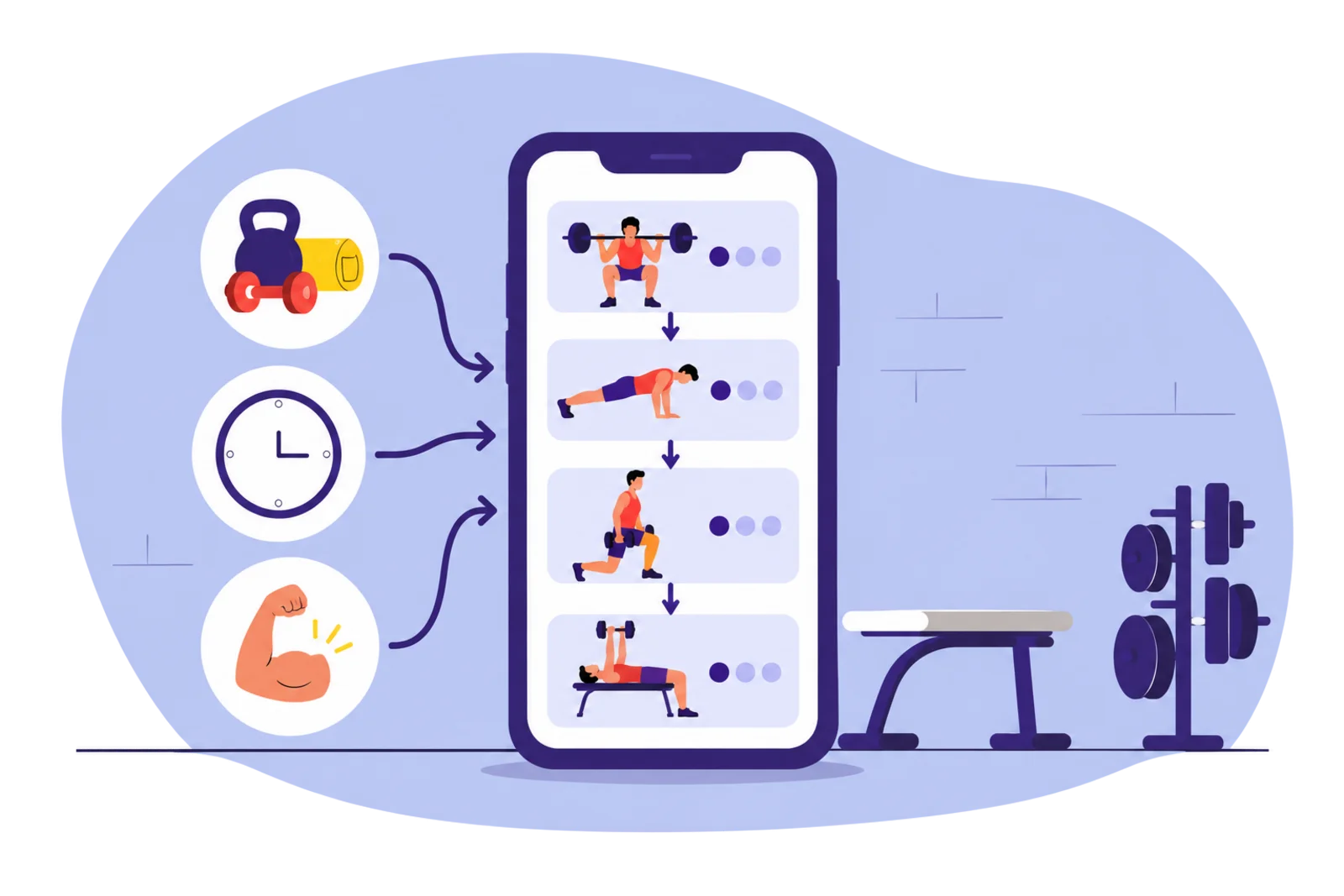
A workout plan generator or training plan generator is software that turns user inputs and programming rules into a structured training plan. A complete generator produces more than a random exercise list: its output should define recurring workouts and relevant variables such as exercises, order, sets, repetition targets, and weekly organization.
Inputs can include the training goal, training experience, available days, desired workout duration, equipment, physical limitations, preferred or excluded exercises, and priority muscles or lifts. A meaningful input should change an appropriate part of the output. Asking about equipment has little value if the result still prescribes unavailable machines, and asking about schedule does not personalize a plan beyond placing the same template on different weekdays.
Plan generators differ from one-off workout generators. One-off tools answer what to train in a single session; plan generators organize repeated training over several weeks. Some products build a stable program that can be progressed and edited, while others generate or adapt each upcoming workout. Either model can be useful, but the distinction affects exercise consistency, technique practice, and how easily performance can be compared.
Evaluate the output rather than the amount of automation. Check whether the training split fits the schedule, exercise selection fits the equipment and goal, workload is manageable, and a progression method explains what happens after the first week. The user should be able to inspect and correct the result. An automated plan can still contain unsuitable exercise choices, unrealistic session lengths, or more work than the trainee can recover from.
A generator does not diagnose injury or replace individualized assessment by a qualified professional. Pain, medical restrictions, pregnancy, or rehabilitation can require information that a standard questionnaire does not capture. Even without those issues, generated targets remain starting decisions that should be evaluated against completed sessions and adjusted when the evidence supports a change.
Alpha Progression Pro creates a personalized plan from the user’s gender, training experience, goal, active gym, training frequency, desired workout duration, and muscle priorities. The selected goal—maximum strength, muscle gain, or strength endurance—mainly determines the repetition targets. Equipment settings limit the exercise pool, and muscles can be prioritized or deprioritized. The training split can be selected automatically or constrained to full body, upper-lower, push-pull, push-pull-legs, or PPL-upper-lower where the chosen frequency permits it.
The generated result includes the split, exercises, their distribution across workouts, set counts, repetition ranges, and dropsets. RIR targets, periodization, and a deload can be included optionally. A generated plan can run indefinitely or for 4 to 7 weeks. Periodization requires a duration of at least two weeks, and a planned deload is not available for an indefinite plan.
The result remains fully editable. Exercises, exercise and day order, sets, repetition and RIR targets, dropsets, supersets, duration, and the RIR and periodization settings can all be changed after generation. The plan retains a stable exercise structure unless the user edits or replaces it; later progression recommendations adapt weights and repetitions from logged performance without silently rebuilding the plan. For a current comparison based on input depth, plan stability, progression, and editability, see the editorial workout plan generator guide.