Nutrient timing
Also known as: Meal timing
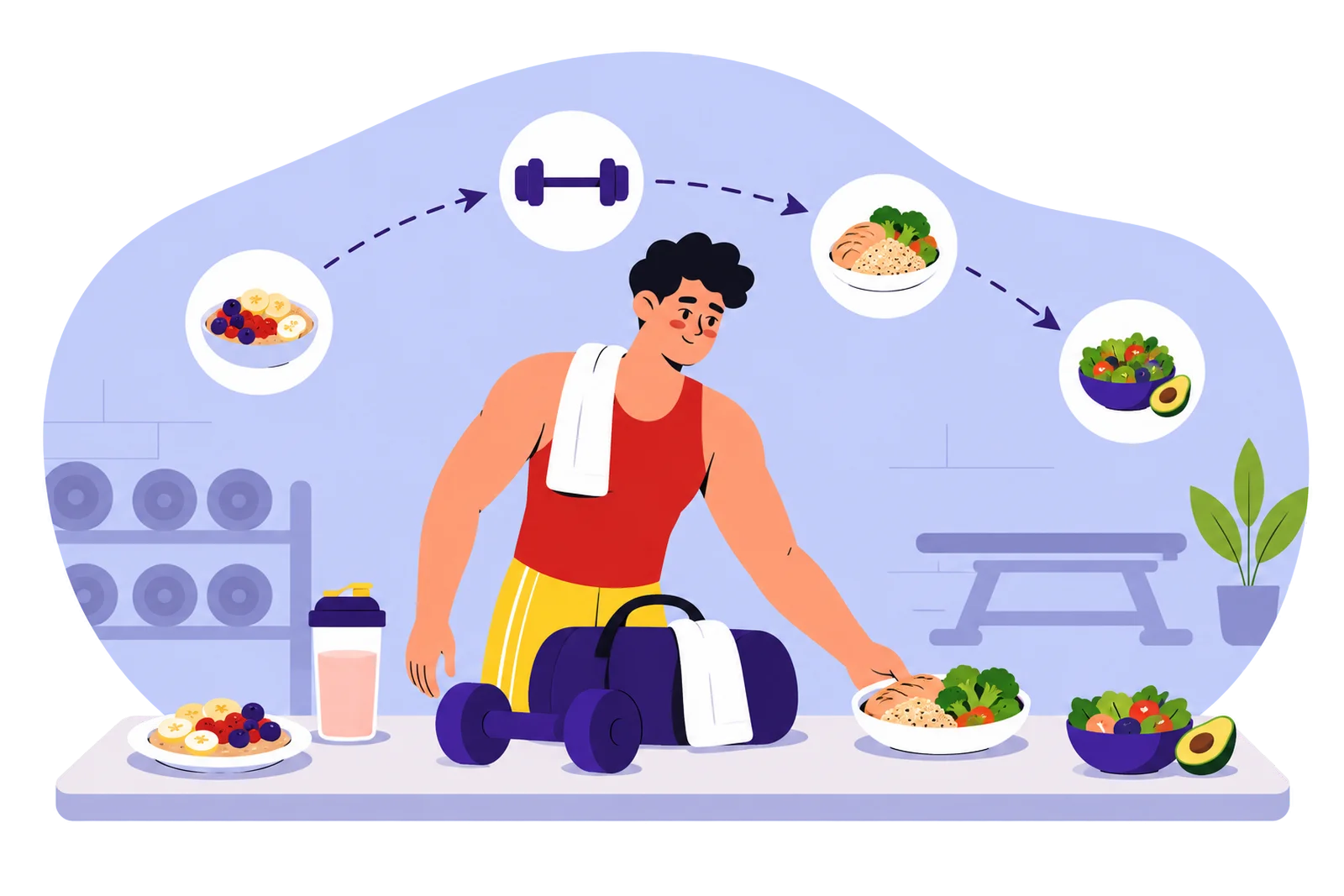
Nutrient timing is the planned placement of meals or nutrients across the day and in relation to exercise. It includes what is eaten before, during, and after training as well as how protein, carbohydrate, fat, and total energy are distributed. Timing can refine a suitable diet, but it cannot compensate for inadequate daily intake.
For most recreational strength trainees, the priorities are sufficient daily energy and nutrients, a workable meal plan, and consistent training. The 2017 ISSN position stand on nutrient timing describes timing as context-dependent rather than one universal protocol. Training duration and intensity, the previous meal, the time until the next session, digestion, and the athlete's goal all change the useful strategy.
A pre-workout meal can provide carbohydrate and amino acids and prevent distracting hunger, but its size and timing should match tolerance. A large high-fat or high-fiber meal may need more digestion time. Food during a workout is usually unnecessary for a typical lifting session; carbohydrate, fluid, or electrolytes become more relevant as activity becomes longer, more intense, or repeated and when conditions increase losses.
After training, muscle remains responsive to protein for far longer than a narrow few-minute "anabolic window." The meal eaten before training also continues to affect amino-acid availability. A sensible post-workout meal within the normal course of the day is therefore generally enough, while distributing protein over several meals can be practical. The DGE's position on protein intake in sport likewise cautions against dogmatic timing and places intake in the context of the whole day.
Carbohydrate timing becomes more important when rapid restoration of glycogen is needed before another demanding session. If recovery lasts a full day or longer, adequate total carbohydrate and ordinary meals usually allow more flexibility. Competition schedules, multiple daily sessions, and prolonged endurance work therefore earn more precision than three isolated gym sessions per week.
Meal timing can also be used for comfort, sleep, appetite management, and adherence, but responses vary. Choose a pattern that supports the actual schedule and can be repeated. There is no single clock time at which food changes from useful to wasted, and no timing technique can rescue a chronically insufficient or nutritionally poor diet.