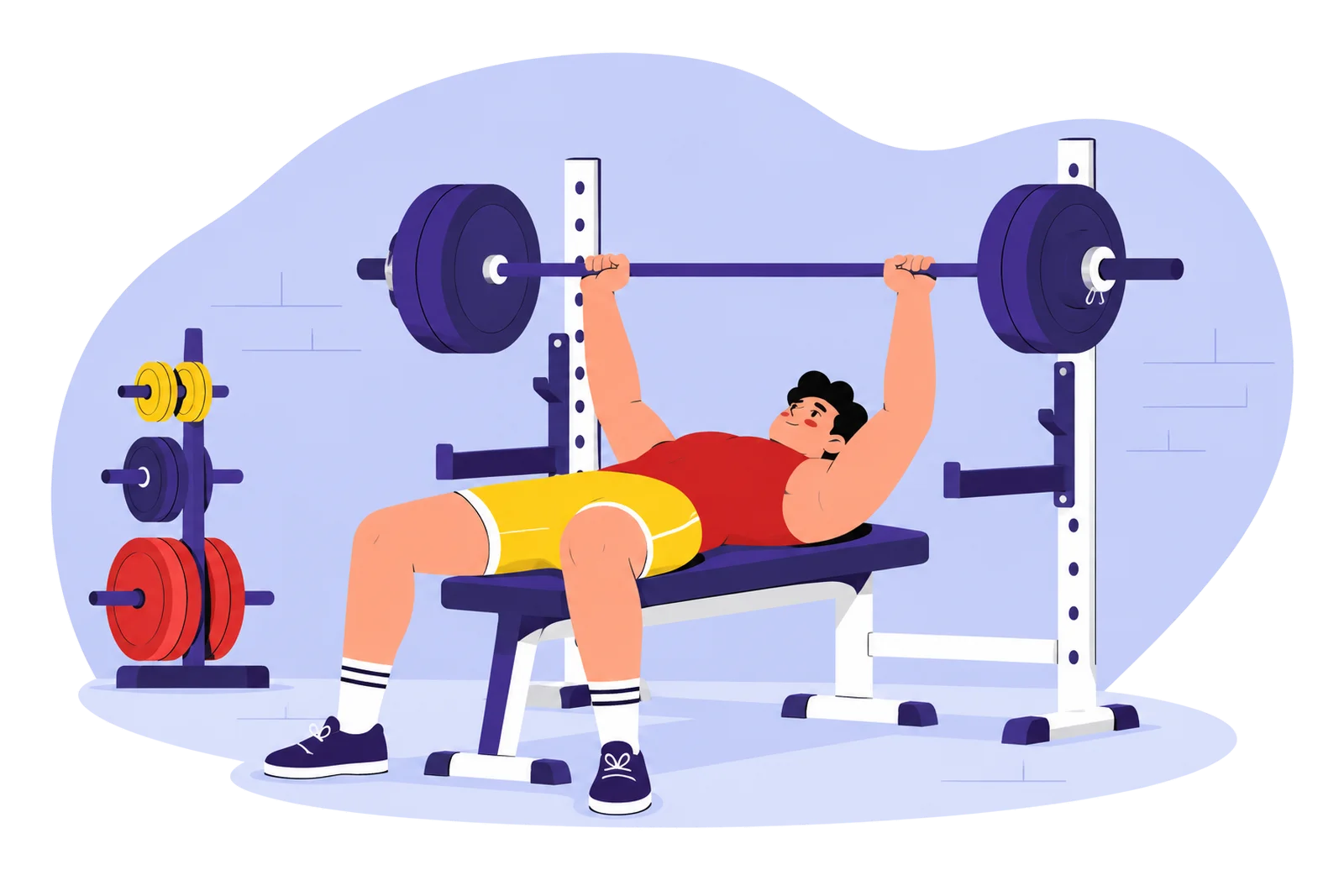
Working set
A working set is a set performed as part of the main prescribed training work, after any necessary preparation. It uses the exercise, load, repetition target, and effort intended to develop the session’s goal. Working sets are usually distinguished from warm-up sets, which prepare performance without creating much fatigue.
"Working" does not mean that every set must be taken to muscle failure. A hypertrophy working set may stop with several reps in reserve, while a power set may intentionally end before repetition speed falls. Technique-practice sets can also be working sets even when they do not feel exhausting. The defining feature is their planned role in the program, not a universal effort threshold.
For example, a lifter might perform the empty bar for ten reps, 40 kg for five, and 60 kg for three before completing three sets of eight at 80 kg. The first three are ramp-up sets; the three sets at 80 kg are the working sets. A top set followed by lighter back-off sets can contain several different working loads within the same exercise.
Working-set count is commonly used to estimate training volume, especially for hypertrophy. The estimate still needs context. A set far from failure, a short-range set, and a technically degraded set may not provide the same stimulus as a controlled, challenging set. Compound exercises also distribute work across several muscles, so one set does not necessarily count equally for every muscle involved.
Track the load, completed repetitions, and movement standard of working sets consistently. Effort measures such as RIR can add context, but they are not mandatory for recognizing progress. Alpha Progression Pro can provide a weight and repetition recommendation for each working set. Recommendations may differ between sets because the app uses performance from previous workouts, the sets already completed in the current workout, and what is planned for the upcoming set.