Peaking
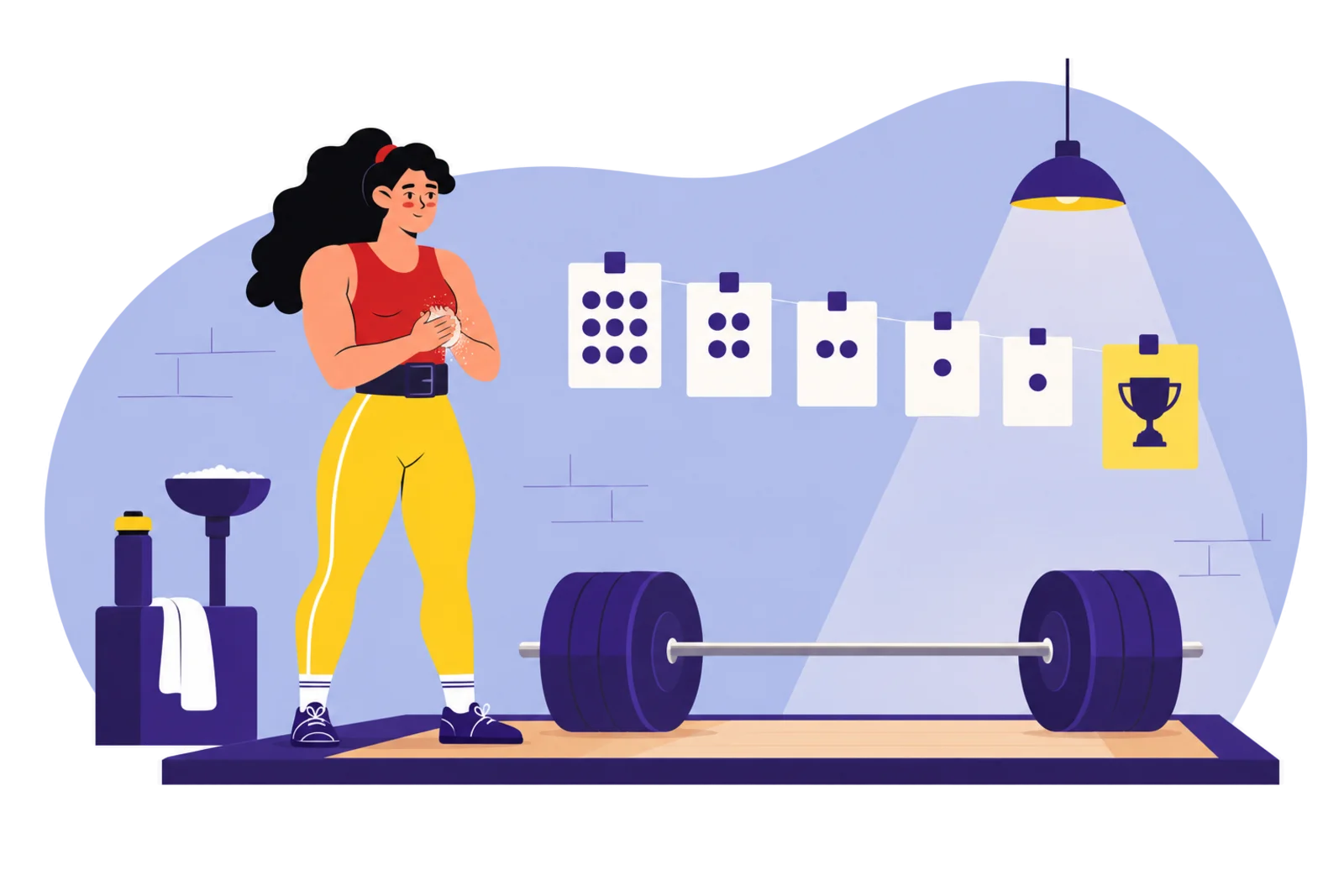
Peaking is a planned phase before a test or competition that aims to make an athlete's existing performance capacity expressible on a specific date. In strength sports, it usually shifts training toward the competition lifts or test conditions while reducing enough accumulated fatigue to perform well. The main goal is readiness for the event, not creating the largest new long-term adaptation during the final days.
A strength peak commonly increases specificity as the event approaches. Exercise selection may narrow, competition technique and commands receive more practice, and heavy loads may appear while unnecessary accessory work declines. The precise sequence depends on the sport, lifter, and preceding training block. Peaking is therefore part of periodization, not a standard final week that can be copied onto every program.
A taper is the reduction of training load used near the event; peaking is the broader goal and phase. Volume is often reduced before intensity or technical specificity, but the appropriate magnitude and timing are uncertain and individual. A review of tapering and peaking for powerlifting describes reduced training volume and short periods of training cessation as common strategies while also noting the limited powerlifting-specific evidence. More rest is not automatically better, because excessive removal of practice can leave the athlete unprepared.
Peaking also differs from a deload. A deload reduces training stress to support recovery and can occur without an upcoming test. A peak is organized around a performance date and may retain demanding, highly specific work while overall fatigue is managed. It is likewise distinct from a specialization cycle, which focuses on developing one muscle or lift over a block rather than expressing the result on a particular day.
Performance should not be tested maximally throughout the entire peak. Frequent all-out attempts can add fatigue and reduce the quality of later work. Instead, the plan manages exposure to heavy loads, technical confidence, attempt selection, and fatigue management so that testing occurs when intended. Pain or injury is not a signal to continue simply because a competition is near.
For trainees without a competition or scheduled test, a formal peak may offer little value. Ordinary progressive training can continue without trying to create a brief performance maximum. If a one-repetition maximum is tested, the result reflects performance on that day and should not be confused with a permanent change in maximal strength.