Ligaments
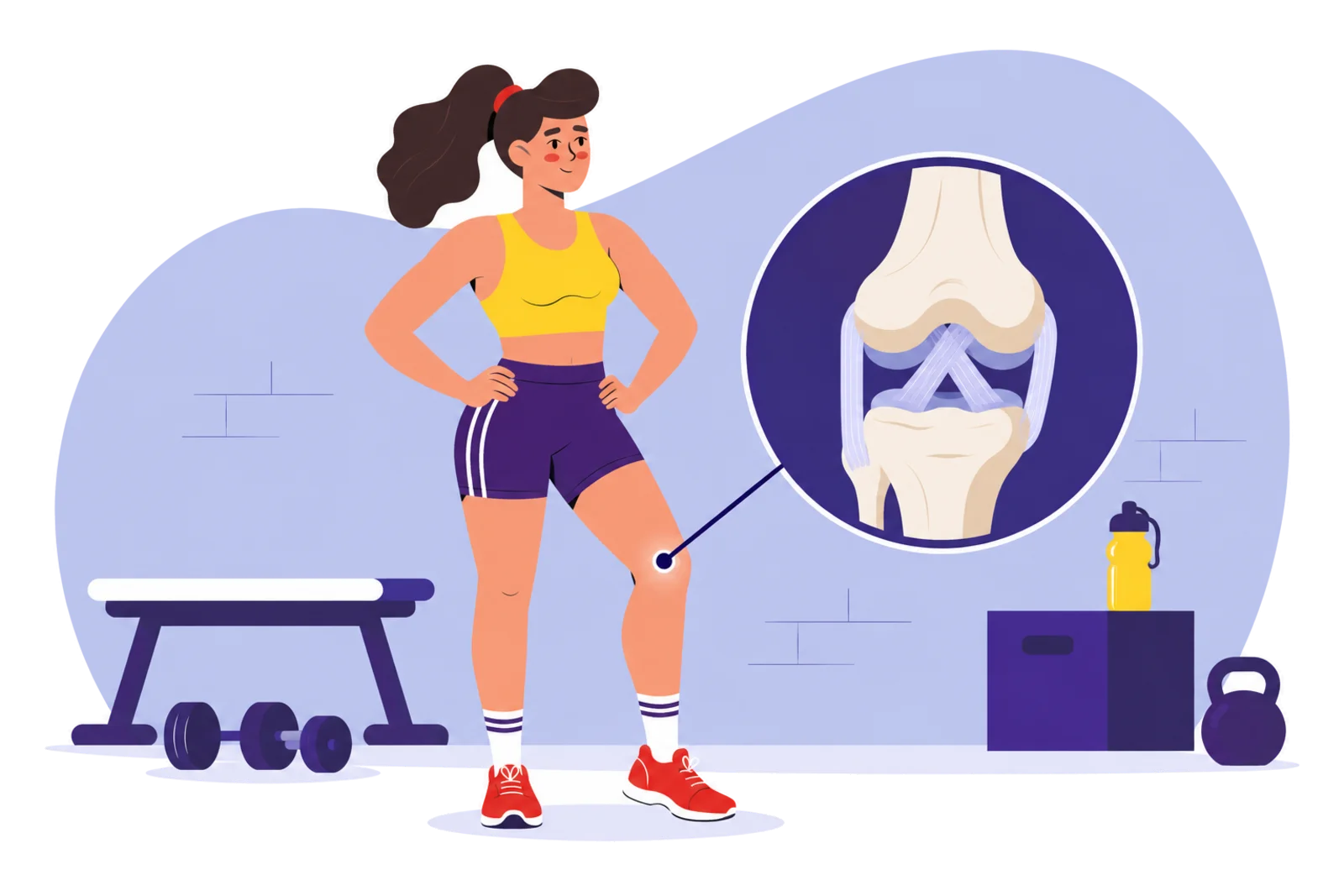
Ligaments are bands or sheets of collagen-rich connective tissue that usually connect one bone to another across or around a joint. They help guide motion, resist excessive displacement, and contribute sensory information and passive stability.
Their role is more nuanced than simply "holding a joint together." Different ligament bundles become taut at different joint angles, interact with the shape of the bones and joint capsule, and work alongside muscles and tendons. Some are located outside a joint capsule, some form part of it, and others lie within the joint. A 2025 anatomical review emphasizes that the traditional bone-to-bone definition is useful but does not capture every structure historically called a ligament.
Ligaments and tendons are both dense connective tissues, but their primary roles differ. Tendons transmit force from muscle, whereas ligaments mainly guide and restrain relative motion between bones. Strengthening the muscles around a joint can improve active control, but it does not turn a damaged ligament into muscle or prove that the ligament itself has fully recovered.
A ligament is not supposed to make a joint completely rigid. Normal movement uses a joint's available range of motion, with muscles providing active control and ligaments contributing restraint near specific directions or positions. More flexibility is therefore not automatically better for every ligament or joint, and a feeling of tightness does not identify a ligament as the source.
Ligament loading occurs during sport, daily activity, and strength training. Appropriate progressive exercise can build the capacity of the overall joint system, but sudden force, excessive rotation, or trauma can exceed tissue tolerance. An acute sprain, instability, marked swelling, inability to bear weight, or persistent joint symptoms should not be self-diagnosed from a glossary definition. Assessment and return-to-training decisions need to match the specific ligament, injury severity, and activity.