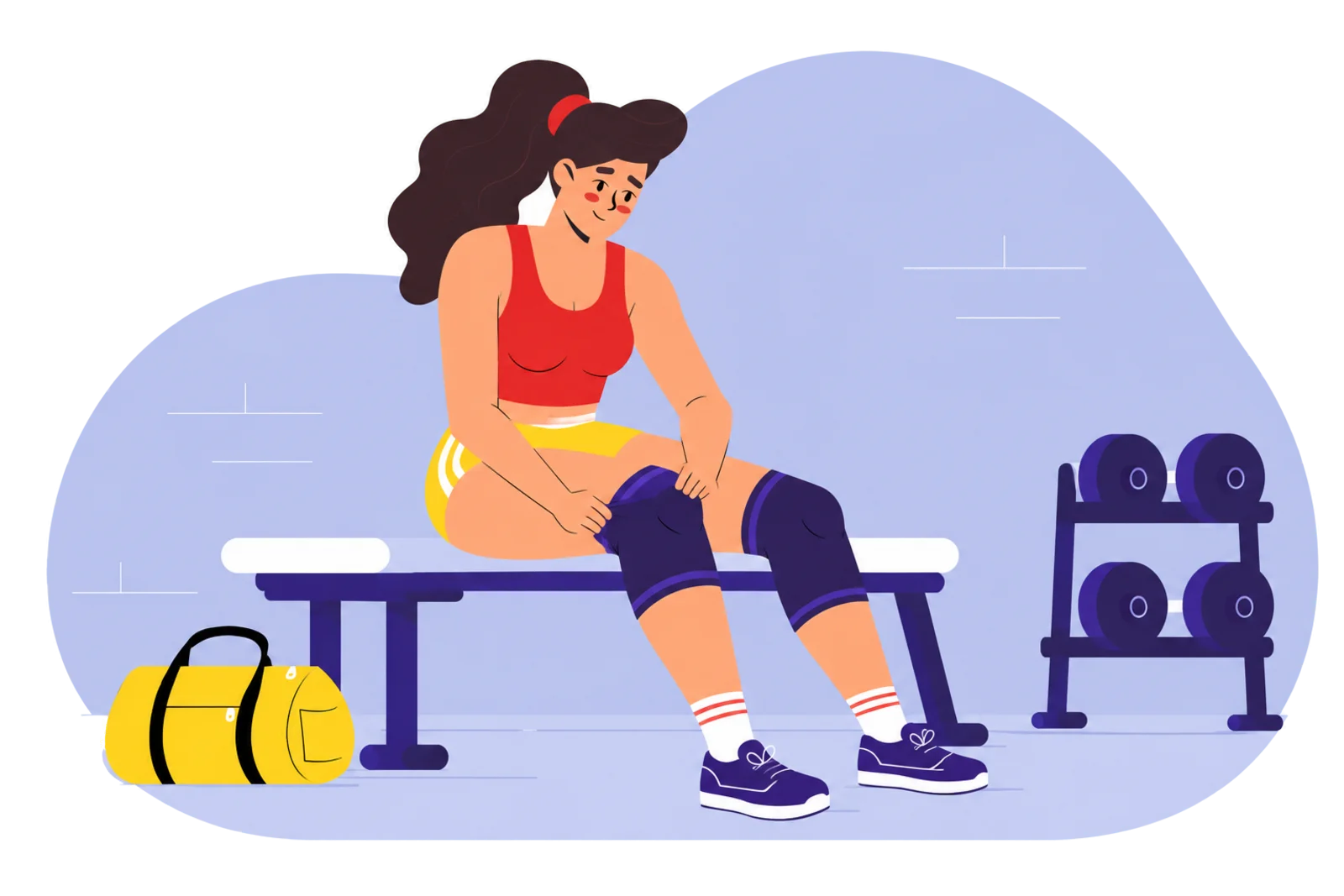
Knee sleeves
Knee sleeves are pull-on tubes, commonly made from neoprene or an elastic knit, worn around the knee during training. They provide compression, warmth, and sensory feedback and may offer modest elastic assistance. They are not the same as knee wraps, which are long strips applied under adjustable tension and generally change squat mechanics more strongly.
A sleeve should lie flat and remain centered over the joint through the intended movement. Sizing systems differ by brand: a tighter size can feel more supportive but may be harder to put on and can restrict comfort or circulation. The sleeve should not cause numbness, tingling, marked discoloration, or sharp pain. Remove it and reassess the fit if those signs appear, and keep the material clean and intact.
Performance effects vary. In a small 2021 crossover study, 15 resistance-trained men squatted a higher one-repetition maximum in neoprene sleeves than in a minimally supportive control sleeve, but the other tested strength, power, and endurance measures did not improve. The study was acute, involved one population, and described knee sleeves as under-researched, so it does not establish a universal strength benefit.
Some lifters use sleeves for heavy squats, Olympic lifts, or general comfort; others train equally well without them. If they are worn during maximal-strength work, use them consistently when comparing performance because the task may differ from sleeveless lifting. The sleeve does not replace an appropriate warm-up, load selection, or repeatable form.
Knee sleeves do not guarantee injury prevention and should not be used to mask new or worsening pain, swelling, locking, or instability. Those symptoms may require qualified assessment. Competition rules also distinguish sleeves from wraps and specify permitted materials, dimensions, or approved products, so check the current rules of the relevant powerlifting federation.