Hypertrophy
Redirected from "Muscle growth"
Also known as: Muscle hypertrophy, Muscle growth
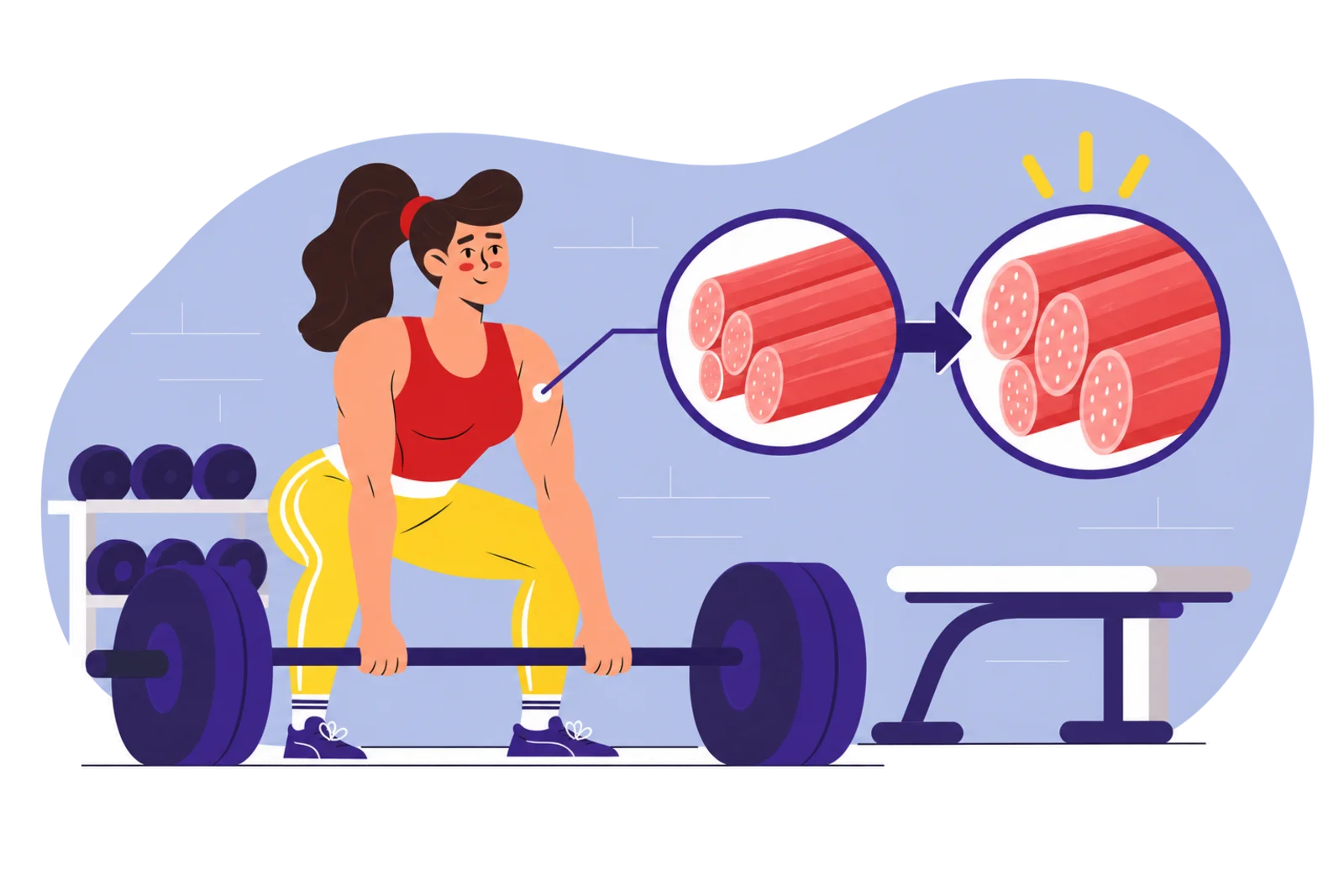
Hypertrophy, more specifically muscle hypertrophy, is an increase in the size of skeletal muscle, largely through enlargement of existing muscle fibers. In everyday fitness language, it is called muscle growth or muscle building. Hypertrophy is an adaptation and a possible training goal; it is not the same thing as strength training, bodybuilding, a workout pump, or short-term swelling after exercise.
Repeated strength training can produce hypertrophy when the trained muscle fibers experience a sufficient, recurring challenge and the body has the resources and time to adapt. Mechanical tension is a central candidate stimulus, but the biological process involves interacting mechanical, cellular, and metabolic signals. A mechanistic review of resistance-exercise hypertrophy discusses several plausible stimuli and sensors rather than reducing growth to one pathway. Acute hormone changes, one signaling marker, or a rise in muscle protein synthesis after a single session cannot by themselves predict how much muscle someone will gain over months.
Hypertrophy can occur across a broad range of loads when sets are sufficiently challenging and technique keeps the target muscles involved. Weekly training volume matters as well: more hard sets can support more growth on average, but the additional benefit tends to diminish and individual tolerance varies. The 2026 ACSM position stand found greater average hypertrophy with higher-volume prescriptions in the reviewed evidence, not one universal set target for every person or muscle. Exercise selection, range of motion, progression, frequency, and recovery all affect how useful that work is.
Muscle soreness, a pump, and muscle damage may accompany training, but none is a required scorecard for growth. Deliberately chasing soreness or tissue damage can add fatigue without proving that a better stimulus was created. More useful long-term signals include increasing performance with a consistent technique, body measurements or standardized images taken over time, and direct assessments of muscle size when available. Day-to-day scale changes mostly reflect factors such as food, fluid, and glycogen rather than new muscle tissue.
Adequate protein, sufficient total energy, sleep, and recovery support the process. A calorie surplus can make gaining muscle and body mass easier, especially for experienced lifters, but it is not an absolute prerequisite in every situation; beginners and people with more stored body fat can sometimes gain muscle without gaining body weight. Rates of growth differ widely with training age, genetics, program quality, nutrition, and consistency.
For a muscle-growth goal, Alpha Progression Pro can generate a strength-training plan around your available days, equipment, and muscle priorities, then provide set-by-set load and repetition recommendations from your logged performance. The app records training inputs; it does not directly measure muscle hypertrophy.