Fatigue
Also known as: Training fatigue
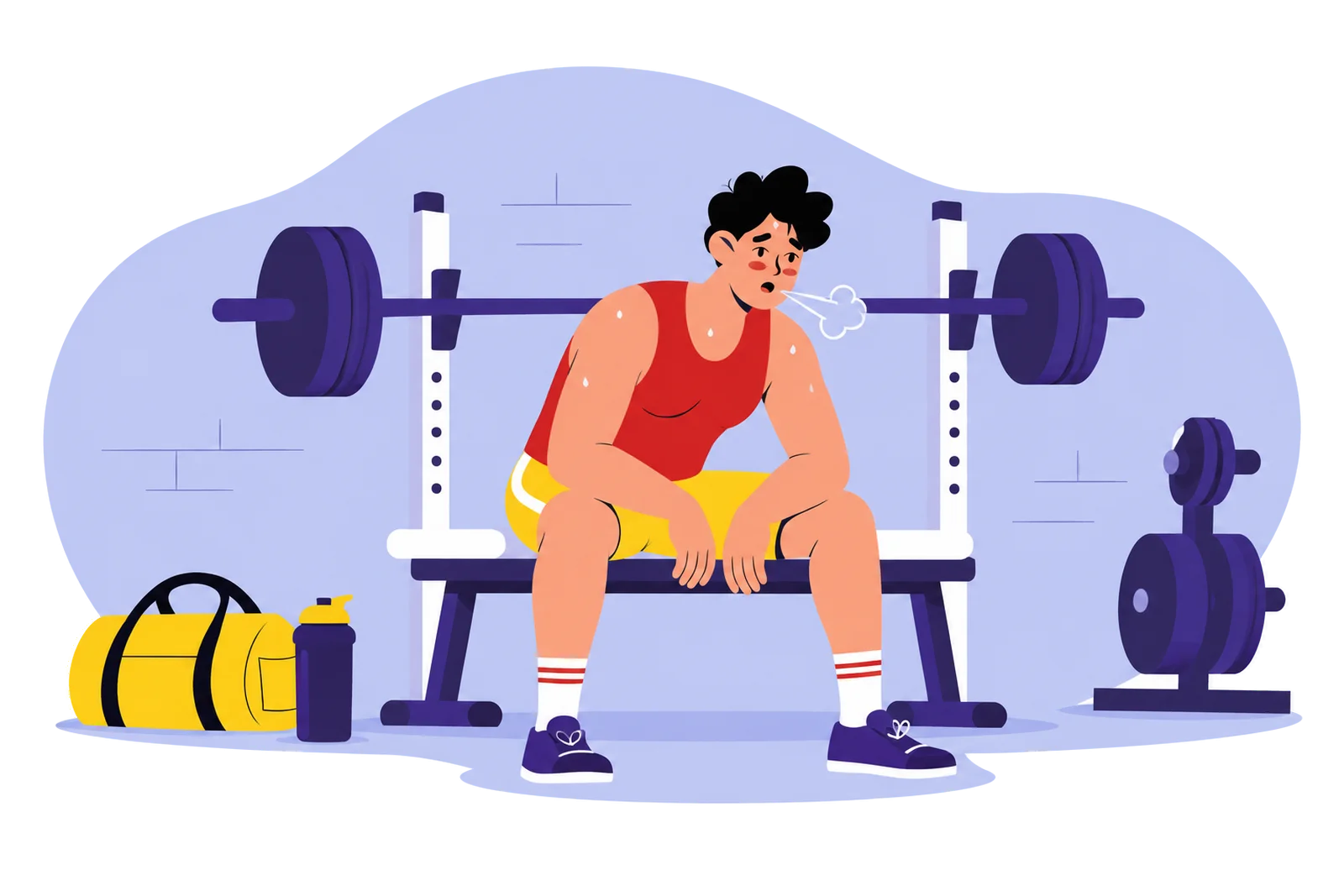
Fatigue is a limitation in physical or cognitive performance, an increased sense of effort, or both. Training fatigue is fatigue associated with exercise and the stress surrounding it. It can appear during a set, after a workout, or after repeated training sessions, and it is not one single substance or mechanism.
It helps to separate performance fatigability from perceived fatigability. Performance fatigability is an observable change, such as producing less force, completing fewer repetitions, or losing movement speed under comparable conditions. Perceived fatigability is the person's sense that maintaining the task requires more effort. The two often interact, but they need not move together. A lifter may feel unusually tired yet perform normally, or show a measurable performance decline without feeling exhausted. A review of fatigue and human performance uses this distinction to explain why no single test captures every form of fatigue.
Exercise-related reductions in force can involve peripheral factors within the working muscles and central factors affecting voluntary neural drive. Coaches also use systemic fatigue for a broader, whole-body drop in readiness. These labels are useful for describing patterns, but ordinary gym observations cannot precisely locate a mechanism. A hard leg session, for example, may reduce squat performance locally while sleep loss also raises perceived effort across unrelated exercises.
Acute fatigue is an expected consequence of sufficiently demanding training and normally changes as recovery occurs. It is not the same as delayed-onset muscle soreness, although both can occur together. Fatigue also does not prove that a workout produced a better adaptation: excessive fatigue can reduce later set quality or interfere with subsequent sessions.
Useful monitoring compares repeated observations rather than treating one symptom as decisive. Load, repetitions, technique, effort ratings, motivation, sleep, soreness, and performance across several sessions can supply context. Persistent or unexplained fatigue—especially when it affects daily life or occurs with illness, pain, dizziness, breathing difficulty, or other concerning symptoms—has many possible causes and should not automatically be attributed to training.