EMS
Redirected from "Electrical muscle stimulation"
Also known as: Electrical muscle stimulation
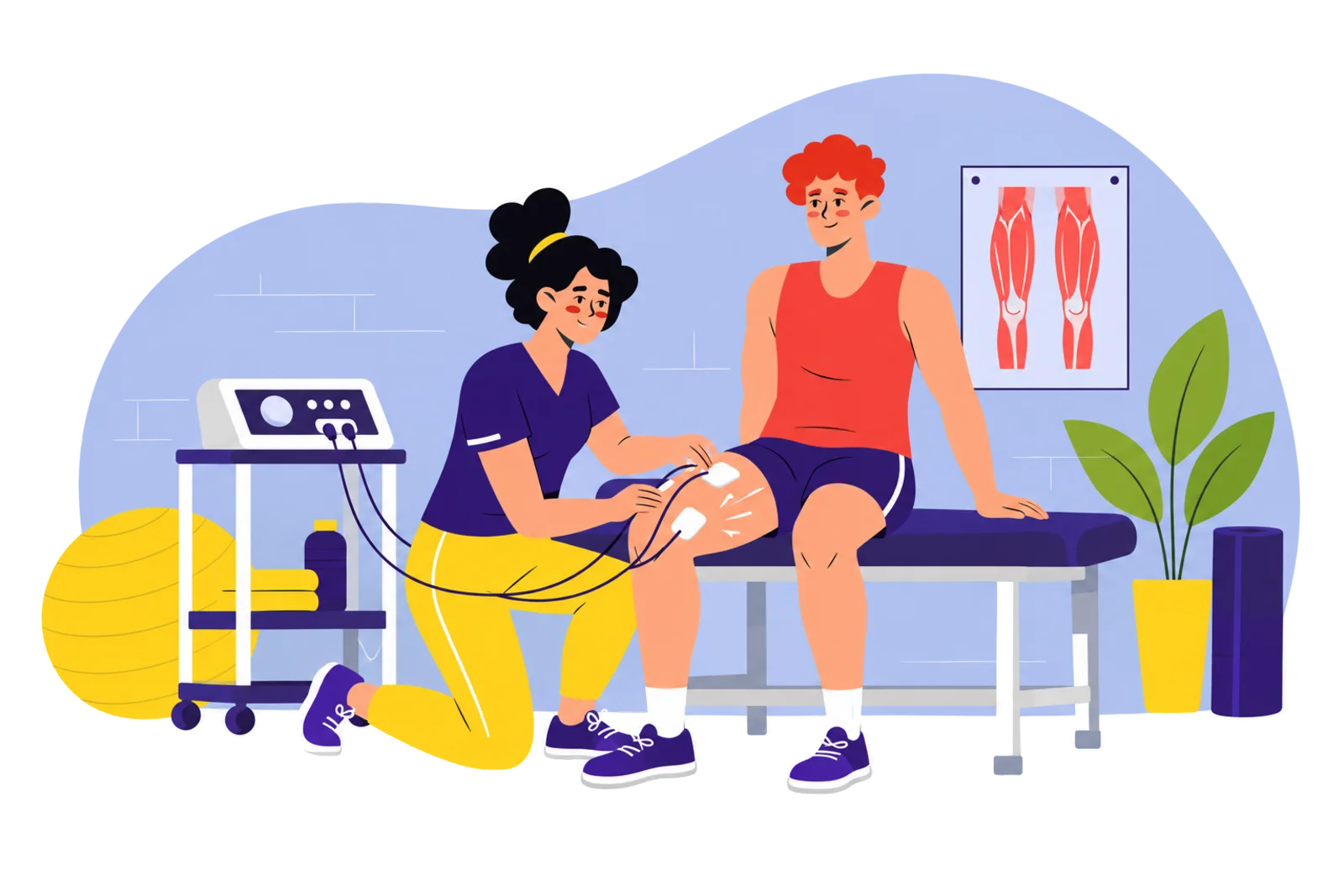
EMS, short for electrical muscle stimulation, uses electrical pulses delivered through skin electrodes to trigger muscle contractions. Local neuromuscular electrical stimulation targets selected muscles, while whole-body EMS applies current through a suit or several large electrode areas. EMS should also be distinguished from transcutaneous electrical nerve stimulation (TENS), which is primarily intended to stimulate sensory nerves rather than train force-producing contractions.
During voluntary strength training, the brain and central nervous system recruit muscles while the person controls an external task and practices its skill. EMS depolarizes motor nerves according to electrode placement, pulse settings, and current intensity, so contractions can occur without the same voluntary command. Some sessions combine EMS with deliberate movements, but electrical stimulation and the voluntary exercise remain separate parts of the training stimulus.
EMS can increase measured strength under some protocols, but the evidence does not establish one optimal dose or show that it reproduces every adaptation of conventional training. A 2023 systematic review included ten heterogeneous studies with 174 healthy adults. All reported strength gains, yet strength-related functional outcomes did not improve and protocols varied substantially. Those limitations make EMS a possible supplementary method, not a general replacement for practicing the movements and loads in which someone wants to perform.
Intensity is not judged by how dramatic a contraction looks. Electrode position, pulse width and frequency, session duration, muscle area, previous exposure, and recovery all change the dose. Clinical uses and rehabilitation protocols should be directed by an appropriately qualified professional, because the goal and contraindications differ from a commercial fitness session.
Whole-body EMS can create a large systemic and muscular load in little time. An international 2023 safety guideline recommends screening, close supervision, gradual familiarization, appropriate recovery, and avoiding exhaustive initial sessions. EMS does not guarantee muscle gain or injury prevention. People with an implanted electronic device, relevant illness, pregnancy, or unexplained symptoms should obtain individualized medical guidance before use rather than relying on a generic device program.